Categories
Ecommerce

Increase your online sales through these ecommerce marketing strategies

Marketing plays an important role in driving sales for a business, whether they are offline or online. But the strategies that drive traffic to ecommerce platforms and further convert them into sales are completely different from traditional practices.

Here’s a look into some interesting and proven ecommerce strategies that can help brands sell more through their ecommerce websites. You’re welcome!

Cross selling

One of the most effective ways to increase the cart value of the customer is to cross sell. Cross selling means selling a different product to the customer, either as an alternative or an addition to the product that’s already added to the cart. Ecommerce websites like Myntra and Amazon usually have a section called “Frequently Bought Together” where they show combos of products that complement each other.
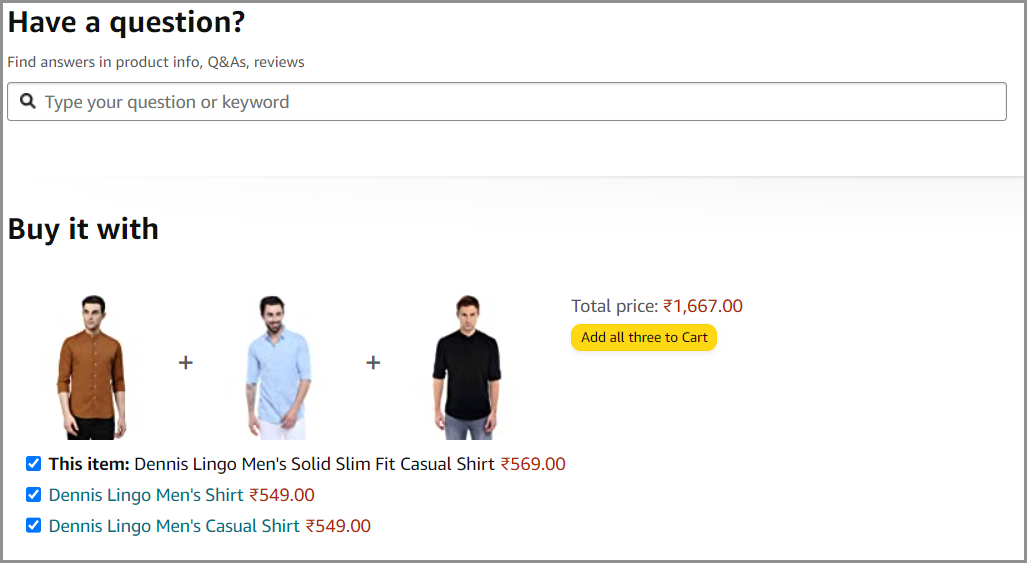
cross selling on e-commerce Amazon.in cross selling multiple shirts on their product pageFor instance, if a customer is looking to purchase a mobile phone online and as they scroll down, it will show a combined price window with a pair of earphones and power bank. It lures the customers into thinking he/she is getting a great deal in purchasing all of three products together.

Build up a sense of urgency

Another great ecommerce marketing strategy to encourage customers to purchase a product is by creating a sense of urgency in their minds, of missing out on buying the said product if they don’t act now or. The idea is to offer the customer a short window to make the decision and have a feeling of getting a great deal out of it.

There are various ways to do it. One of the most commonly practiced methods is to entice them by showing the quickly running out stock levels. When a customer sees that the product they just liked might go out of stock soon, chances are, he/she will end up buying it.
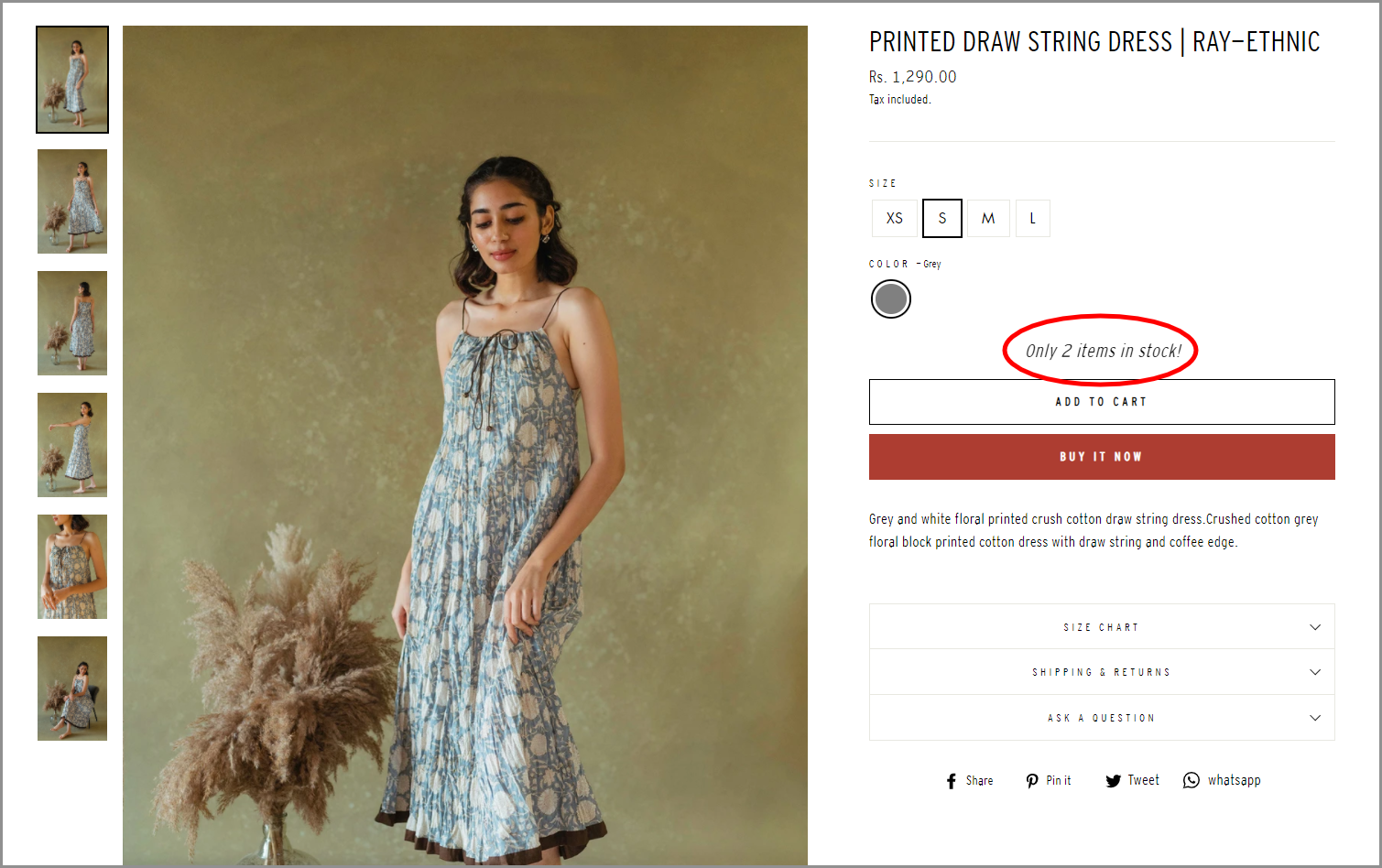
Ray ethnic low stock remaining image creating sense of urgency Rayethnic.com creating a sense of urgency by highlighting high demand of their productsAnother way to create a sense of urgency is to offer a limited period discount or benefit. For instance, Amazon displays a pop-up under many of its products which offers either an attractive price deduction or a free overnight shipping if the customer places an order within X number of hours.

Blogs

Now, this is a long-term strategy which requires quality content and consistency over a period of time, but the benefits are many. Blogging is an effective and proven strategy used by major ecommerce marketing companies in India.

But, how do blogs help?

Blogs are among the best ways to boost an ecommerce website’s organic SEO reach. Blogs give businesses a channel to engage with their regular customers through well written blogs that offer value to them. Just like how Ray Ethnic does with their blogs. They offer fashion tips and product suggestions and promote ethnic fashion through their well written articles.

Ray Ethnic Ecommerce Blogs A variety of blogs on rayethnic.com that talks about fashion tips using their productsBut these aren’t just blogs, they’re smartly written content pieces peppered with relevant keywords that help their website rank higher on the search engine page. This means their visibility increases further when people search for ethnic wear.

Additionally, blogs can be interlinked to relevant products from the inventory, enticing the reader to click on the product link and maybe purchase it too. For instance, a blog that talks about perfumes to be worn during winters, can have one or many products hyperlinked every time the brand or the fragrance is mentioned in the write up.

Offers/Discounts

A recent survey by Brizfeel showed that price is a top factor that influences a buyer to purchase something online. Giving the customer the feeling of having grabbed a great deal or saving a good amount of money on a purchase, is one of the best ways to push sales on ecommerce. And everyone loves a sale or a great discount.
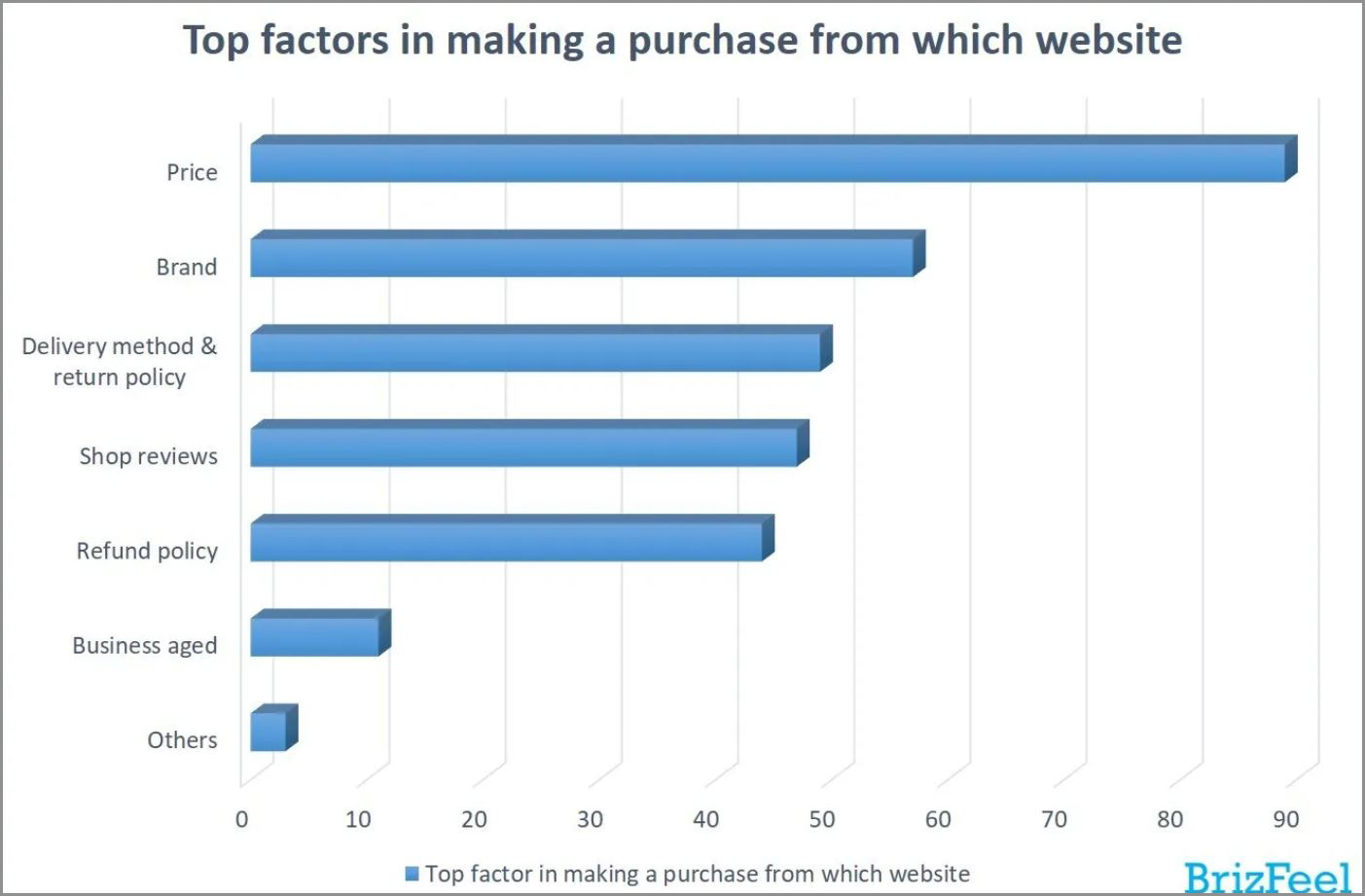
Graph showing purchase trends due to offers and discounts Brizfeel research showcasing various aspects that influence shoppers to purchase moreBy regularly having offers like “The End of Season Sale” for lifestyle brands, or a “Buy One Get One Free” offer for FMCG products and food items, the quantitative sales among regular shoppers see a sharp rise. Further, when these regular customers talk to their friends and family about the great discount they availed on the sale, it attracts new visitors to the site, and chances of getting new sales go up.

Reviews

A common trait among all online shoppers is to check what other shoppers like them are saying about their experience with the business and their products. And good reviews always push more sales. The Brizfeel survey above further states that 94% of customers won’t purchase from an online store that has bad reviews.

Encourage positive reviews from customers, to write about their experience with the brand, either on the review columns in the website itself or on platforms like Google Business, Facebook pages, etc. This can be done through a pop up right after they checkout, which prompts the shopper to post a review. They can either be in the form of ratings, e.g. how many stars out of 5 or a small text box that posts the review publically immediately.

These are proven strategies that have increased sales, improved visibility and strengthened the brand positioning of many ecommerce businesses in India and internationally. Implementing them in your ecommerce sales strategy will definitely bear fruit.

Loved what you just saw? Let’s get it started on your ecommerce website too. Get in touch with Flora Fountain, a full-service digital agency offering Ahmedabad’s best ecommerce website design and development services to various national and international brands across the spectrum.


Categories
Digital Marketing Agency

You MUST outsource your digital marketing. Here’s why.

Marketing is the most crucial cog in the wheel for a business to move forward and grow. Often companies might think hiring a graphic designer and content writer is all it takes to start marketing on digital, but it is a special kind of beast which requires a team of experts with some very special skills to tame it. A graphic designer or a traditional marketing executive usually does not understand the intricate details and trends of social media presence, engagement, search engine optimization, digital campaigns, and the website design and development required to support it.

For mid-sized businesses, this is where outsourcing comes to your rescue. Instead of setting up an entire team of digital marketers — graphic designers, UI experts, content writers, social media analysts — and paying them hefty salaries, businesses can easily hire digital marketing agencies with in-depth expertise across digital platforms. Still wondering if it’s the right move? Read on to know the benefits you’ll reap by outsourcing your digital marketing activities.

Trust the experts

Outsourcing is smartsourcing, especially when it comes to digital marketing. When you hire a digital marketing agency, you get a specialist team of digital marketing experts like search engine optimization (SEO) experts, social media managers, digital content writers, UI designers, Pay-Per-Click campaign experts, web developers, and data analysts. Not only that, most agencies have platform-specific experts for Facebook, Instagram, Youtube, LinkedIn, and Twitter marketing. Agencies also have specialization based on whether you are marketing directly to end consumers, B2C, or to other businesses, B2B. They help you in all aspects of social media marketing, content marketing, email marketing, ecommerce, SEO, Search Engine Marketing (SEM), and Data Analytics, based on your business goals.

This way, you can focus more on growing your business and your digital marketing agency can ensure brand awareness, engagement, leads, and loyalty across digital platforms.

Digital without borders

The internet has no boundaries. You could be a premium tea vendor based out of Assam, India or a staffing agency in New York, United States, but your business can be marketed globally by a digital marketing agency in Ahmedabad, India. Infact, both of these examples happen to be clients of our digital agency Flora Fountain! 🙂

Digital-without-borders

Instead of being forced to recruit digital marketing executives in their city, businesses can hire digital agencies with the best experience in their particular segment whether it is jewellery, fashion, food, or lifestyle. And since all the communication and assets used in digital marketing can freely move through digital mediums like emails, messengers, and office suites, it is a smart and reasonable choice.

Say goodbye to long commutes to even longer meetings around conference tables to discuss every next move. Times are fast and you must be too. Hello digital!

Easier access to your audience

A study by Sprout Social says that customers feel more connected to a brand, if it has a strong social media presence. And on the internet, feedback is faster. Customers can reach out to brands directly on Twitter, Facebook, and Instagram and leave reviews on platforms like Google Business, Facebook, Zomato, Trip Advisor, Make My Trip, etc. This gives brands an opportunity to really hear what their end-user has to say, make them feel heard with quick response and/or solutions to any challenge. In this way improving the customer experience and solidifying brand loyalty.

Easier-access-to-your-audience

This is possible only when you have a digital marketing agency build a strong presence for your business across all relevant digital platforms and actively manage and engage the audience. Whether it is websites, social media pages, business profiles or digital storefronts.

With people now working, learning, shopping, and even dating online (Thank you, Covid-19!), it is imperative for businesses to tap this goldmine of an opportunity!

What gets measured gets done

Data is very important to understand the growth trajectory of your business. And a digital marketing agency helps you measure your business’ success. How, you ask?

What-gets-measured-gets-done

Digital marketing companies have expert data analysts in their teams, whose job is to study the trends of business on various digital media platforms, measure things like bounce rates, page views, conversions through social media and web analytics. And strategize on how to optimize these metrics. These metrics are usually compiled by digital marketing agencies on a weekly, fortnightly or

monthly basis to give businesses a clear picture of what promotions are working, which products are in demand, and who are the people that are consuming your products. Along with these reports, digital marketing agencies provide tips and suggestions on places you can improve, which new trends to tap on, and choose the next plan of action.

In simple terms, measuring and analyzing data helps brands sell more of what is already selling.

Save money

With a digital marketing agency on board, businesses can keep a closer tab on their marketing budgets. Multiple campaigns for the same brand can be run at the same time. An agency will manage your spending through Google Ads Manager, Facebook for Business, and various other digital tools meant for online campaigns like Google Pay-Per-Click, boosts for engagements and leads, and boosts for profile and website visits.

Save-money

Since these tools offer reports on every dollar spent and track clicks and conversions, businesses can analyze which campaigns require additional resources and which ones can be cut down a notch.

Further, when you have a digital marketing agency manage everything from websites to social media to SEO, you are saving a huge amount of money that could have been spent on hiring, training and paying people to do these jobs for you full time.

Make us your growth partner

Through our technology, design and content expertise, our Ahmedabad-based digital agency, Flora Fountain has been part of the growth stories of many national and international brands and individuals as their full service digital marketing agency. We have been able to help brands with their social media marketing, SEO, website development, content-writing, brand research, digital strategy and online branding, despite being in different geographical locations spread all over the world.

Check out our work here, and to plan out your digital strategy, drop us a line here.

Categories
Branding Services Digital Marketing Agency

Turning businesses into brands: The case for a professional creative agency

Any marketing agency out there can design hoardings, create logos or manage social media.

But what differentiates a brand from business?

Hard-to-miss presence in the market, on-point messaging to its exact audience and a knowledge of the brand even outside its demographic. These are the hallmarks of a brand. And this magic happens when a creative agency comes into the picture.

So how does a professional creative agency turn a business into a brand? Read on to know…

Team of creative geniuses

From researching to strategizing, designing to writing, and planning to executing; a creative agency has experienced professionals working on every aspect of your business. They use their learnings from working with multiple brands to understand the market and create an effective strategy for the business to succeed.

It is cost effective

With a creative agency on board, businesses can get their branding and promotional work done for a fraction of the cost of hiring an entire team of professionals in-house. Think about it. There is a huge expense in acquiring the required tools and softwares. Then there’s the cost of paying salaries to writers, designers, strategists, and consultants. This will drive the cost per lead up through the roof!

Get a fresh perspective

man-with-laptop-cartoon

Sometimes the best way to sustain customer interest and attract a new audience for the brand is by introducing newness; in the brand communication, the product range and the promotional activities.

And this is where a creative agency comes to your rescue. A creative agency in India like Flora Fountain looks at the brand from a neutral perspective, sometimes even from a consumer’s viewpoint. It then identifies the challenges that the brand might be facing. Such as product acceptance, brand communication, the brand’s central idea getting lost or even customer service and feedback.

A creative agency thinks outside the box and comes up with new ideas, and creates innovative solutions to solve problems and delight the target audience.

Saves time

By hiring a creative agency, a business is not just bringing on creative geniuses to work on the brand, but their numerous years of experience working on various brands across different markets catering to all kinds of consumers.

This saves a lot of time in the long run. How, you wonder?

The years spent working on creating successful brands means the agency knows the market in and out. They can anticipate the challenges the business might face, understand the customers’ needs and desires from that market segment and pick the right strategy to counter those challenges and fulfill the customers’ desires.

The amount of time the business would save on research and testing multiple strategies over time in just understanding the audience is invaluable.

puzzel
Efficient management of campaigns

With the backing of a creative agency, a business doesn’t have to worry about involving its in-house marketing team to monitor, analyze, and study the campaigns being run for its promotions. Because a creative agency has the resources, tools, and manpower to run the day-to-day management of the marketing campaigns, analyze its success ratio and work out the next set of plans.

Benefit from their network

Some of the best creative agencies in India are known to have a great network, built through years of experience, recognition and credibility. And in the current times of Instagram, these digital agencies have a great following among netizens too.

So when you work with a creative digital agency in India like Flora Fountain, you get to benefit from their network. Why? Because agencies regularly share the work they have done for brands within their networks too, both offline and online. And that way, your business gets additional exposure to people who follow such full-service agencies.

It’s time to make the right decision for your business, to build it into a brand. It’s time to get the big guns, and hire Ahmedabad’s best digital agency as your creative partners for your offline and online branding and promotions. Get in touch with us for a free consultation session today!

Categories
Content Writing

5 ways of getting creative with professional content writing for SEO

A common misconception among writers in this age of digital is that creative content writing and SEO content writing just don’t go hand in hand. But we, somewhat controversially, believe they can co-exist! HOW?!

First, let’s get some clarity on the basics.

  • What is SEO (Search Engine Optimization) Content Writing?

Creating readable content for the web that ranks high on search engines, through the use of relevant keywords in the main body and the meta tags and title, multiple headers and bullet points within the article to break down the content, and interlinking them with other relevant articles and pages.

  • What is Creative Content Writing?

This is where imagination takes flight and originality, the front seat. This is where a story is narrated to the reader, engaging them with every line, a chuckle here, maybe a gasp there, keeping them hooked till the end, delighting them with a conclusion that leaves them wanting more.

Now you might be wondering, how does one merge these two seemingly different schools of thought into a single piece of writing? Well, here’s how.

Know your keywords

One of the most common feedback website writers get is that their content does not have any of the keywords the client wants. This is a common problem when the blog is written by a separate team of content writers, only after which the SEO team kicks in for checking the SEO compatibility. Instead the SEO expert and content writer must work closely, right from the blog’s ideation to checking the keywords before its eventual publishing.

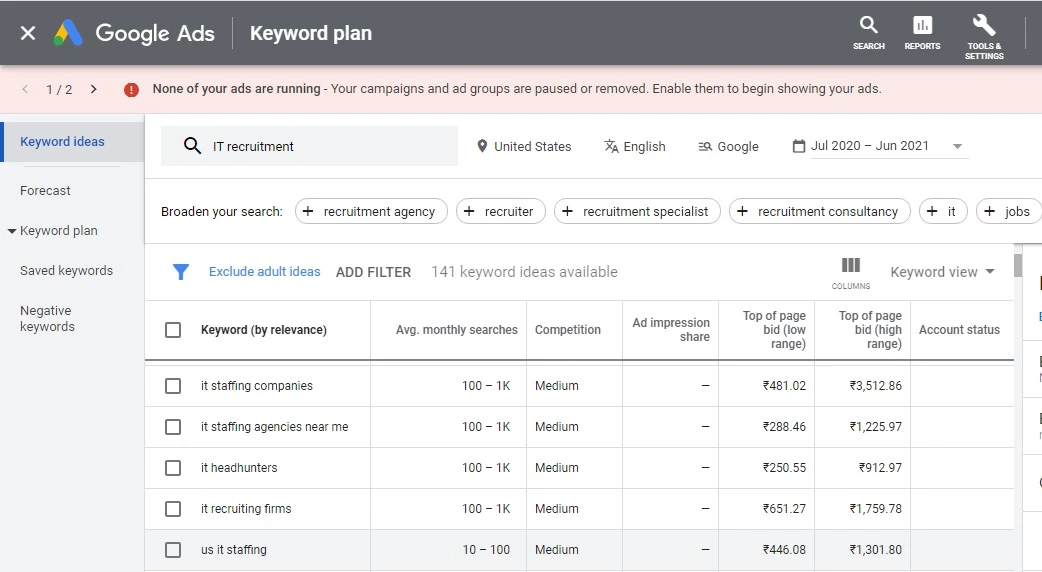
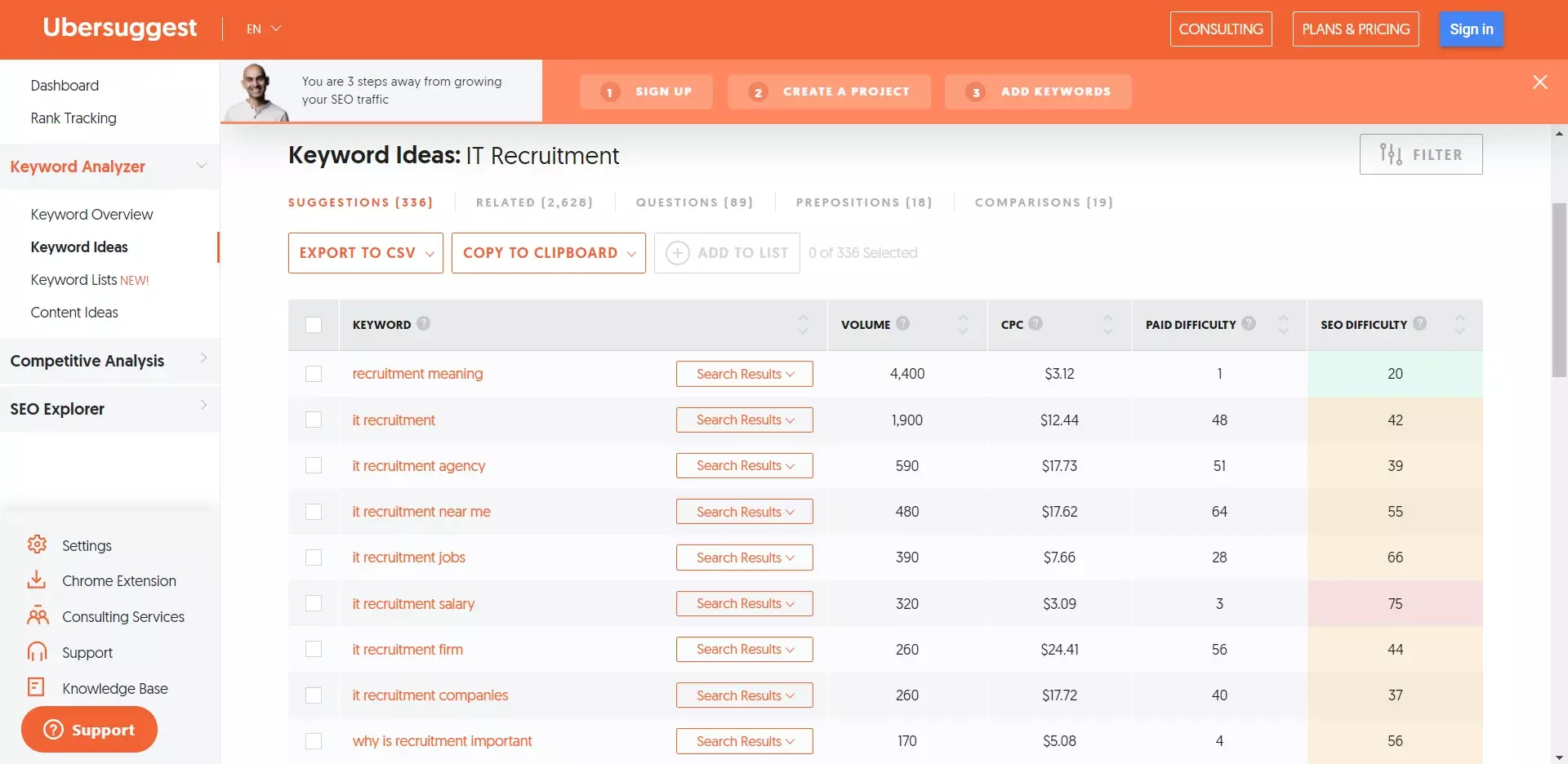
To elaborate, the team must first identify the keywords for a few months, as well as, the target audience. This is usually done by the SEO expert. Once done, these keywords are provided to the content writer and together the two can create a calendar of topics for anything from a month to 6 months! In case you don’t have an SEO executive and are operating as a solo writer, you can use tools like Google Keyword Planner, Ubersuggest or Moz.

Flora Blog chat

Enter the name of the industry or the topics you’re planning to write on, and the tool would suggest multiple keywords with their performance, relevance and ranking data too.

Flora Blog

Keep it simple, silly!

Google cares for keywords. But the reader doesn’t look for SEO keywords, but for something that will keep them engaged, intrigued and delighted.

If the content is crisp and short and provides the reader with value as information or entertainment, the targeted audience is usually hooked. One of the best ways to do crisp writing online is through Listicles. Our minds have become trained to at least skim through an entire list, rarely leaving in the middle. And if something is interesting, we spend more time reading the copy, increasing the time spent on the website.

Moreover, overly complex, long sentences, peppered with repetitive words and phrases are a turn off not just for the reader, but Google too while ranking content for its search engine.

This is because search engines rank content that provide answers to the question asked by the viewer. The simpler and clearer the content is, the better chance it has to get ranked higher on the search window. Keep in mind, you are eventually writing for an actual person with an actual problem. The search engine is just the bridge between you and the reader.

  • Keep your sentences short
  • Highlight the topic using H tags
  • Provide answers
  • Make it easier still, use bullet points

(See what we did there?)

And to help with the SEO, apart from using a keyword or two in the copy, link them to a relevant source that backs your idea/solution.

With attention spans getting lower and so much content being available to us online, these tips help the reader keep engaged with the content instead of just skimming away.

Use relevant imagery with Alt Tags

Remember how we all loved comic books as kids? Remember, how our least favourite book in school would be the Math textbook?

Know why? Comic books were full of exciting imagery with captions, while that Math textbook was just a series of long explanations, confusing numbers and no pictures at all.

By adding great pictures, well designed artwork and fun GIFs to your blogs, you’re not only adding relevance to the content, but also keeping the reader hooked to see what comes next, kind of how Pixar does it.

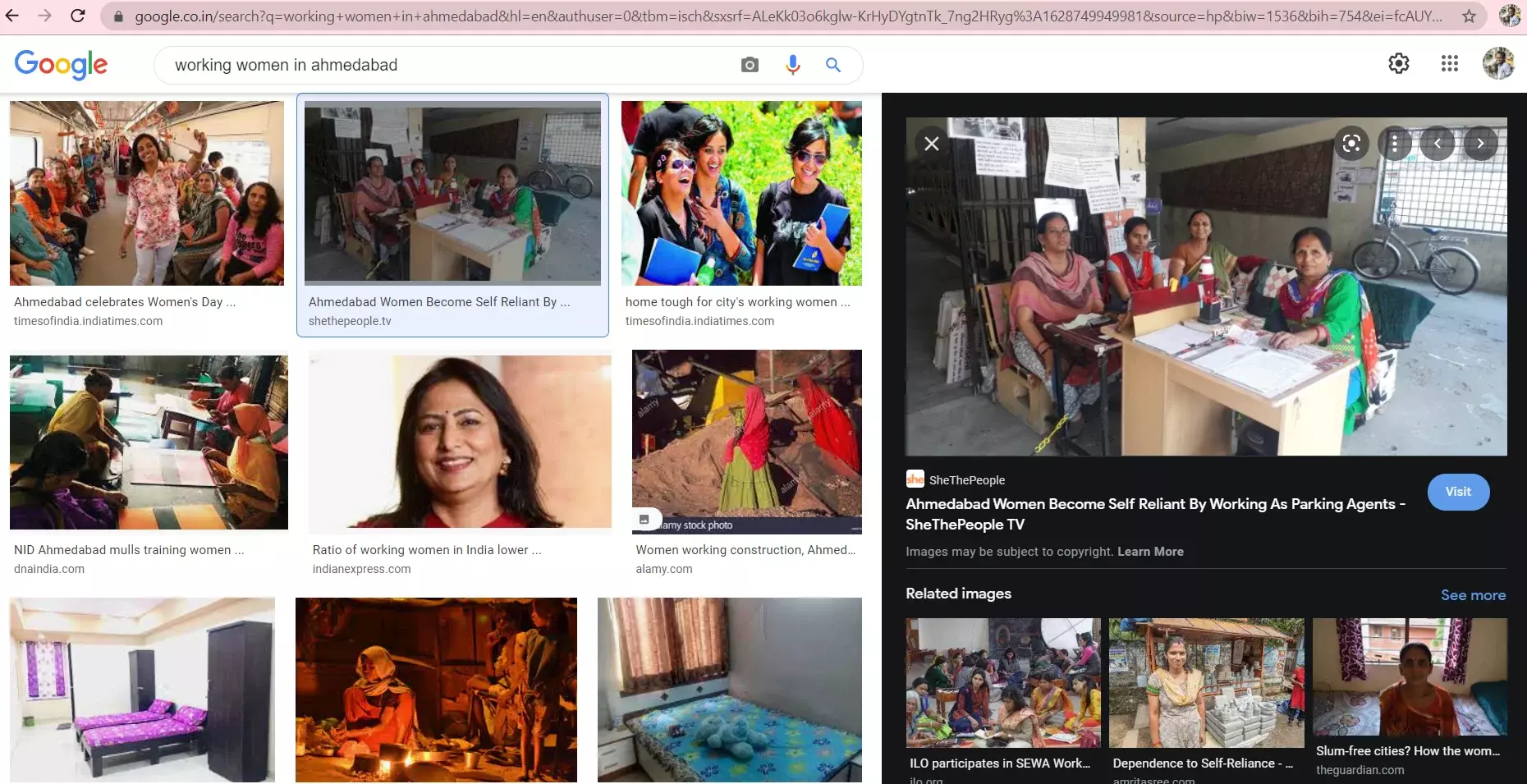
And what’s more, images help with SEO too. Of the 5.4 billion searches done on Google every day, millions of them are for images and videos. When you insert pictures and embed videos within your content with the right Alt Tags, they get pulled up on top, bringing the blog along with it.

Flora august blog

Play a little … with Meta titles, headers, descriptions

Content teams are known to show little or no interest when it comes to “creating metadata” for their blogs. As they believe it is their writing that’s the hero here.

Ironic given that it is after all through the Meta Title, Headers and Meta Descriptions that people find the heroic content online. After all, what is the point of writing a riveting piece, if the audience it is meant for is unable to find it online?

But it doesn’t have to be all dry and clinical. There are great ways to soup up your meta content with the keywords. For example, when writing the meta description for this very article ::

Usual SEO Content Writing“SEO content writing for websites and blogs can be creative. Here is how to write creative website content writing with the help of professional content writing services such as the ones provided by Flora Fountain”
Creative SEO Content Writing“Writers often lament that creativity was murdered by SEO on the Internet, when it comes to professional content writing. But we somewhat controversially believe that creative content writing and SEO content writing can co-exist peacefully … without crying murder”

The first is a very basic way to write a Meta description for this blog. While the second one does the same thing with a fun spin.

Meta data such as titles, headers and descriptions are the perfect vehicles for your keywords in, and the first place search engines look for when trying to index the content.

Whether it is website content, blogs or articles, here are the bits of meta information to ALWAYS have in each page of your online content:

  • Meta Title of 50 to 60 words with your main keyword in it (Usually with a figure in it)
  • Meta Description of 155 to 160 characters
  • Multiple Headers consisting of 6 to 8 words
  • Slug with all the keywords

Maintain the minimum quantity

How many words in a blog is enough? This is another point where the Team SEO and Team Content Writers can get into conflict. While writers seek creative freedom to write as much or as little as they want to express their ideas, SEO experts suggest that an ideal blog must be at least 800 words long.

Why? Because it gives enough room for both, the writers to let their creativity flow and the SEO experts to embed their keywords within.

Also, a short blog that ends abruptly leaves the reader disappointed as he/she feels that they’ve been left hanging. While a long blog makes them drift away and drop the blog halfway.

And here’s a fun fact, an average reader takes only about 3 minutes to read 800 words. Writing content being mindful of this fact, while keeping all others in mind, is the only way to write engaging content that ranks high! This is a practice followed by some of the best digital agencies all over the world, and definitely one of the reasons why Flora Fountain is known as one of the best professional content writing agency in Ahmedabad

So writers, make sure you follow these points while writing and working in tandem with your SEO team. Or, simply drop us an email and let the content experts of Flora Fountain do it for you!

Categories
Branding Services

From business to brand. It’s not just about the logo

Let’s make it bigger.

Can you make it the same but in pink / yellow / blue / green?

Dekh ke maza aana chahiye!

If you have given or received such feedback, you know what we are going to talk about today.

Yes, LOGOS! Every time there’s a conversation around brand building, the first thing that comes to mind after a brand name is the logo.

Discussions over logos notoriously take over branding meetings, leaving precious little for the other crucial aspects of business promotion and advertising. And it’s time to realize that … a brand is more than just its logo. A brand is a living entity that walks, talks, grows and influences the people around it. Wish to know what makes your business a brand? Scroll down!

Your brand must have a PURPOSE

PURPOSE

So, what does your brand deliver? What does it want to be? Who does the brand speak to? Who should sit up and notice the brand? How would your ideal customer describe your brand? If you never asked these questions about your brand, then you must NOW.

For instance, your business might be that of making artisanal chocolates; but what it actually does as a brand is provide joy to the consumer, the experience of enjoying a delicious treat. That is the actual purpose of the said chocolate business.

Similarly, every brand has its purpose, a problem it solves, and questions it provides answers to. By defining this PURPOSE, the mission and vision of your business is formed. And this should be the first step you take in the process of branding, even before you think of a logo.

Your brand has a PERSONALITY

If your brand was a person, who would it be? How would he/she dress, what would be their favourite food, in which language would they talk? These questions help you define a personality for your brand. And when your brand has a personality, it is able to connect with the kind of people it wishes to serve.

So, how do you want your brand to be?

PERSONALITY

Approachable, genuine, validating and emotional, having an impact on the customer every time he/she engages with it.

Basically, MAKE YOUR BRAND HUMAN. To come up with a personality for your brand, you must…

  • First consider the purpose and the message you want to convey.
  • Study your competition and think of what will make your brand stand out from them.
  • Come up with adjectives and phrases that describe your brand, like, Sophisticated yet Rugged, Intellectual but Street Smart, Honest and Friendly.

See what we did there? This is how you define your brand’s personality.

Use VISUALS to convey your brand’s PURPOSE and PERSONALITY

What comes into your mind when you visualize a 3-pointed star inside a circle? Mercedes, right? What comes to your mind when you imagine the colour red? Coca Cola, Ferrari, KFC…. You get the drift.

KFC
mercedes

Once your brand’s purpose and personality is defined, it’s time for strategy on how to convey it to your existing customers, and the ones who could become one in future upon engaging with the brand.

A strong visual element is important for every brand, to leave an imprint on its customer. And for this, you must pick an attractive colour palette, an identifiable font family and graphics that support the brand’s persona. These visual elements like colour are the silent ambassadors of your brand.

Your brand has its own VOICE

Now, this is where the language comes into play. And no, we aren’t just talking about linguistics here. But the conversational style of the brand, the way it speaks to its consumers.

VOICE

The purpose and personality comes into the picture here again, as they decide the style in which the brand will talk. Is your business providing facts to its end user? Then the tone of the brand is going to be informative and very formal, like Encyclopedia Britannica.

But at the same time, a brand named Diply Facts on Instagram does the same thing, but its language is polar opposite to Britannica. Why? The audience, their age groups and the purpose behind the end product is different from each other.

While the former is used by students, academicians and writers for educational purposes, the latter is used by a younger, casual audience for informal activities like sharing with friends on social media.

Now that you know that building a brand goes much beyond creating a logo, simply hiring a graphic design or logo design company to create one is not enough. You need a creative agency that specializes in branding. Wondering where to find one? Click here to get in touch and start a conversation with us at Flora Fountain!

Categories
Ecommerce

Shopify, WooCommerce or Magento: Which is the right ecommerce platform for your online store?

Looks like you’ve decided to go digital and sell online! Congratulations! It’s a big step.

But a lot of things right at the start might confuse you. For starters, which ecommerce platform should you start your online journey with? This year everyone seems to be raving about Shopify, last year it was WooCommerce and then someone told you about Magento too. The more you speak with ecommerce website development or digital agencies, the more options there seem to be and the more confusing it gets.
So here’s a definitive guide to understand the pros and cons of using each of these 3 major ecommerce platforms, depending on what, how much and who you are selling to…

So, what is Shopify?

While it might seem new, Shopify has been around as an ecommerce platform since 2007. Despite being a paid only solution, it is the second most popular ecommerce platform with about 20% of the market share. A major reason behind this is that it is a software-sold-as-a-service, which means you don’t have to be a coder to set up a Shopify store.

And Magento?

Magento is the big daddy of customizable e-commerce platforms. It has two services, a free Open Source and a paid Magento Commerce, which like Shopify comes with hosting services. With about 500,000 users, Magento has 10% of the online market, including bigger brands that are into serious online retail of clothes, jewellery and even cars.

And finally we come to WooCommerce?

With 29% of the market share, WooCommerce is the most widely used e-commerce platform. It is actually a plugin for WordPress that extends the functionality of this very popular CMS into an online store.
Still wondering which platform to pick? Read on…

Ease of use

This one is especially important for small business owners, as they end up initially doing a lot of the work on their own.

Ease of use

Of the three, Shopify is the easiest to set up and use. It comes with a managed hosting solution, well-designed themes both free and paid, PCI compliance for payments, and a host of shipping solutions already built by logistics companies – all of which can be integrated without coding knowledge. This means all you have to do is buy a domain, connect it with your Shopify account, select a theme, upload products and get ready to sell online.

This one is especially important for small business owners, as they end up initially doing a lot of the work on their own.

WooCommerce on the other hand requires the user to have their own hosting solution, which needs to be purchased before getting started. So you have to buy your own domain, hosting solution, install WordPress and WooCommerce, before you can start customizing themes or entering products. This makes it not quite as easy as Shopify, however, it does give you more choice in selecting your own server. Because of a vibrant community, WordPress also has a wider selection of free and paid themes available online.

Magento is the platform of developers. While it has its own hosting solution, you can also use the Open Source version and connect it with a server of your choice. Getting Magento set up and customizing it requires developers who have knowledge of PHP and HTML.

Customizability

Customizability is almost inversely proportional to ease of use in this case. With Shopify being the most closed platform and offering the least customization. One can customize CSS for the look and feel of the website and use existing app or create new Shopify apps for certain limited customization. Several workflows like the cart page can not be customized at all in the starting plans.

Customizability

Magento, on the other hand, allows for the most customization from the product page to the payment workflow to the user profiles. For some common functionalities, Magento addons are also available in the marketplace. This is the reason most bigger brands that take online retail seriously, choose Magento.

WooCommerce is also fairly customizable, since it sits on the open-source platform of WordPress that is supported by a thriving community. Most of the features you might want to add are already out there as free or paid extensions to the plugin, created either by WooCommerce creators or the WooCommerce community.

Scalability

Scalability

Magento and Shopify are slightly better suited for large databases of products since they are e-commerce first platforms. With Shopify, while adding products does not impact performance, scaling up does become more expensive as your store grows with more users and transactions.

Scalability of products with WooCommerce is possible, however, since it was created as a content platform, adding too many customizations or products without thoughtful technical architecture can impact performance and slow the website down. As a result, you have to hire WordPress developers who are familiar with optimizing the platform as you scale up.

Security

Shopify’s hosting comes with an SSL certificate and PCI compliance making it watertight and secure. With WordPress and Open Source Magento, you have to purchase your own SSL certificate and keep updating any security patches or extensions that the two platforms release from time to time. This is a fairly common practice for most open source software, so it is not a major concern, however, it does require developer help.

Security

SEO Friendliness

SEO Friendliness

Shopify comes with basic SEO support with the ability to add meta tags, image alt text, generate 301 redirects, automatic XML sitemaps and a blogging feature. However, customizing any of this in the basic plan is not possible.

WooCommerce comes with all the above plus the ability to integrate with mature SEO plugins like Yoast for that extra boost to your store’s SEO, by adding keywords per page, real time suggestions for keywords and more!

Magento being the completely customizable platform that it is allows you to define your own SEO strategy and customize the backend to support all of the above features in Yoast and then some, like canonical tags, Google sitemaps, no follow links and literally anything your SEO expert desires.

Support

Being a paid platform, Shopify has quite an attentive and prompt 24×7 support desk available over email for all plans. It also has a pretty comprehensive documentation and, being the second most-popular platform, a thriving community of developers.

WooCommerce has possibly the biggest community of developers helping each other and clients out. One of the benefits of such a community for smaller businesses is that you can hire a WooCommerce developer for parts of the project or some specific functionality quite easily from these forums.

Support

Moreover, pretty much anything you imagine in WooCommerce has probably already been done and put out as a plugin by someone in the community!

Magento is a mixed bag. While Magento Open Source has a community like WooCommerce, Magento Commerce provides prompt support for its paid users, similar to Shopify.

Pricing
Pricing

Shopify provides three different plans ranging from $29 to $299, which includes hosting services. If you are going for a paid theme, this can cost anything up to $180. And finally, there is a transaction fee anywhere from 0.5-2% depending on your Shopify plan. This makes it ideal for a beginner user, but a little more expensive as you scale up and increase your transactions.

WooCommerce and WordPress are essentially free of cost, however, you end up paying for your own server and SSL certificate. Any plugins required for additional functionality should also be factored in.

Magento Open Source is similar to WooCommerce in being open source and requiring server and SSL. Magento Commerce however is for serious online players since its licensing fee starts at $22,000.

The Final Word

To conclude, if you are just starting out online with a limited monthly budget and a whole lot of DIY spirit Shopify is perhaps your best bet. You can play around with themes, make minor changes to the look and feel, add a payment gateway, integrate with a shipping provider, add products and get started within a few weeks, even days.

However, if you plan to build a slightly more customized website and have the financial bandwidth to hire 1 or 2 developers, WordPress with WooCommerce, can work better for you.

For bigger organizations with a long-term online vision, thousands upon thousands of customized products and a free hand with budgets, Magento is the most future proof and customizable solution.

Need more guidance getting started with setting up your own e-commerce store? Get in touch with Flora Fountain, we are good listeners and even better problem-solvers for all your digital marketing and e-commerce needs. Call now, for a free consultation for your online business.