Categories
Digital Marketing Agency

5 Things to Keep in Mind while Hiring a Digital Marketing Agency

Once upon a time a brand walked into a digital marketing agency. And realised by 2025, digital ad spending will reach $800 billion!

Evidently, that isn’t a joke, but neither is hiring a digital marketing agency. Because with the rise in digital spending, more brands want a marketing partner who helps in telling their brand story to the right audience, over the right medium, at the right moment to evoke the right response and get the best ROI.

Too overwhelming? Too many metrics to measure? Too …

Worry not, Flora Fountain, the leading social media marketing agency in Ahmedabad and India shares just 5 things that can help you make a better decision while hiring a digital marketing agency.

Top 5 factors to consider before your hire a digital marketing agency

To hire or not to … hire a branding agency, is a question that you must answer after considering the following points:

  • Identify your purpose
  • Look for an agency with experience and expertise
  • Understand the agency’s processes and strategies
  • Evaluate the results promised
  • Value for money and price play
branding-agency

Let’s dive into the details.

Identify your purpose

Before you venture out to hire a digital marketing agency, introspect and ask yourself:
What end goal am I trying to reach?

  • Is it to increase my reach online?
  • Or keep the existing audience more engaged through content?
  • Do I need help creating content?
  • Evaluate the results promised
  • Or help enhancing conversions?

What particular service does my brand require?

  • What services am I expecting the agency to deliver? (Hint: You want to hire a branding agency for things like brand strategy, identity & logo creation and an eCommerce website development company for things like website development or eCommerce management)
  • Will I require one set of services like social media marketing services and then need to expand my scope beyond it? (In such cases you might want to go with a full-service digital marketing agency, which can provide multiple services)

How much am I willing to keep aside as a marketing budget?

  • Will I be dedicating a percentage of my sales to marketing?
  • Or do I want to invest an initial amount and decide based on the results?

By answering these three questions you will be able to pinpoint WHY you need to hire a digital marketing agency and WHAT services you require from them today or in the future.

Look for industry experience and expertise

industry-experience

Once your goal is set, initiate filtering to identify agencies that have an expertise in your particular industry or the services you are looking for.

It is important to make sure the digital agency has relevant expertise and experience. Inquire and research their specialities and previous successes.

Having digital marketing professionals who have a good understanding of your industry and its specific nuances can make all the difference when it comes to achieving success online. Experience in both general digital marketing techniques, as well as those that are specifically relevant to your industry, plays an important role in selecting the right partner for your business.

Additionally, asking about the resources available for client-agency collaborations such as intelligence tools, content platforms, and analytics software is a must-do for those looking to hire a social media marketing agency.

Here are a few things you can do to understand whether or not the agency is a good fit:

  • Review their previous projects
  • Ask for proof of concept (POC)
  • Ask for referral contacts (in your industry and outside)
  • Look at any blogs or case studies the agency has produced
  • Check their reviews on Google My Business, Clutch etc

Understand the agency’s processes and strategies

Before you decide to work with a digital marketing agency, it is essential that you understand and evaluate how they work.This includes their work ethics, strategies used, work framework and methodology, business terms, approach towards the brand, partners, number of meetings required and project management.

Search Engine Page

The tiniest details from the mode of communication to the efficiency in their process can impact your decision to hire a branding agency. Hence, take time to ask questions that can help you understand whether the agency’s ethics, strategies and processes work for your business.

Knowing these details in advance will help you understand whether the agency is the right fit for you.

Evaluate the results promised

Search Engine Page

Big promises of great results can be exciting, but also can be cause to raise an alarm and ask more questions. Sometimes, if it seems too good to be true, it actually might be!Consider what the agency is promising and ask them how they plan to achieve this? See their track record. Have they delivered such impressive results in the past?

Value for money and price play

This one is important for everyone. From small businesses to reputed brands. However, what you should be evaluating is the value for money and the ROI.

Know the industry standards. When setting the price, ask:

  • If the agency works with a fixed scope or customises it as per the brand requirement.
  • How do they document the investments made for any digital strategy or campaign?
  • Why are their prices low/high?
  • How do they allocate the resources for various campaigns and what are the end results of it?

Also, think from an agency viewpoint, with higher funds, the agency would be able to put more effort and seriousness into the project.

And with that, you will be able to identify the right digital marketing agency to hire.

Hire Flora Fountain!

Anchored strongly in the digital world, Flora Fountain holds expertise in every domain that your brand may need. Including eCommerce website development and management, branding, content curation, designing, SEO, concept shoots, video animation and social media marketing.

With a strong team of experts and innovators, we build unique digital solutions and strategies to provide your brand with the visibility it requires with an exclusively curated scope as per your needs. Cut through the noise with effective strategies and tell your brand story with us. Drop us a hello at hello@flora.ffteam.in and start a conversation.
Categories
Ecommerce

Upselling & Cross-selling to increase sales on your Ecommerce website

Indians spend close to 6 hours every day on the internet. And 50% of the overall online traffic is on online shopping websites looking for products and services. While this trend has gotten a lot of small businesses to start selling online too, many still lack the marketing strategy to capitalize on this trend. And to stand out amongst the multitudes selling online.

As a digital agency in Ahmedabad, focusing as an ecommerce website development company in Ahmedabad, Flora Fountain, always suggests its clients to start upselling and cross-selling online as a part of their digital sales strategy. In short, this means building features on ecommerce websites that encourage customers to add more products to their cart during or even post checkout. But, what is the difference between upselling and cross-selling? And how can they be used more effectively to increase the size of each transaction and retain customers? Read on…

Upselling and cross-selling are commonly confused, but there is a key difference. While upselling focuses on increasing order value, cross-selling involves making a recommendation adjacent to the original product. So an upsell is more of an upgrade, whereas a cross-sell is a whole other purchase.

Wait, wait… Let’s try it with a more relatable example. When a hungry customer orders a burger at a McDonald’s, the guy on the other side of the counter says, “Would you like some fries to go with it?”

That’s a cross-selling pitch. Now, if the counter guy had said, “You can make this a Big Mac for just X rupees/dollars”. That is an upselling pitch. With the world going digital (yes, we’re not going to stop saying it!), brands can implement the same sales strategy on their websites too… Here’s how!

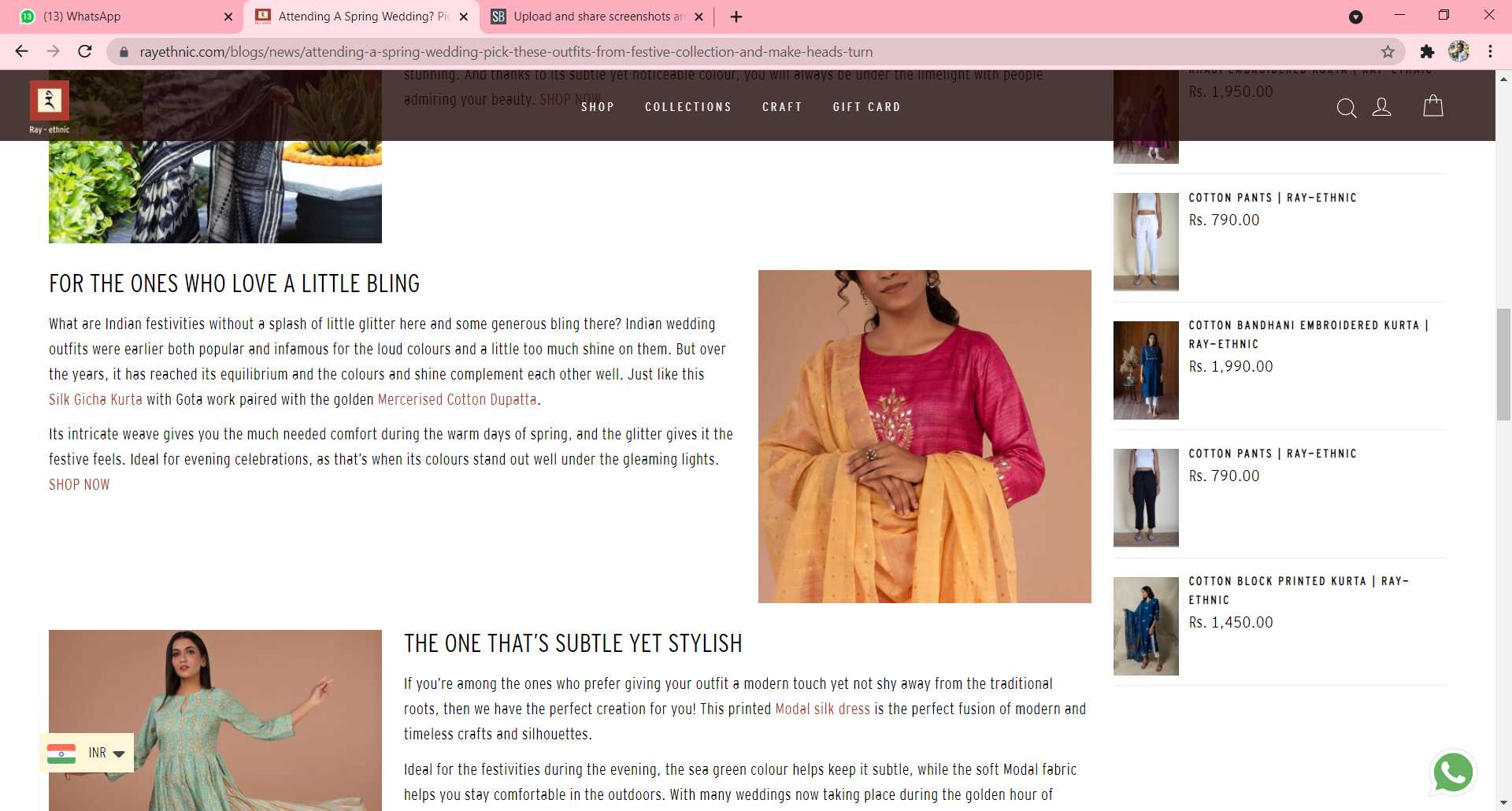
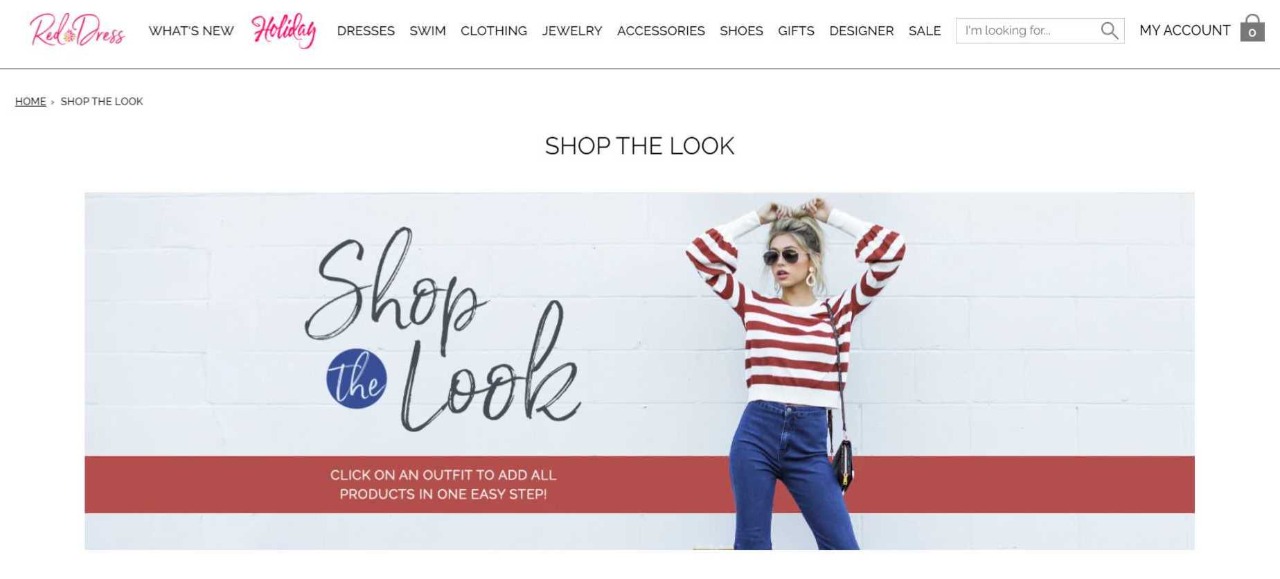
Shop the look

This technique works well for fashion and lifestyle brands. When a visitor selects a product, say a shirt or a kurta, then the display page will show a small module right below the description, where a high definition picture of a model wearing the said shirt/kurta, along with a jacket, trousers, shoes and sunglasses. Now, this technique should be used when all the products in question are available on the website.

reddress-landing-page

Brands like FabIndia, Ray Ethnic and major ecommerce players like Amazon and Myntra use this method of cross selling heavily to increase the cart value of the visitors on their page. Plus, the customers benefit from this, as they get their desired outfit ready to pick and delivered to them for a flat rate of shipping.

Use side-by-side comparisons

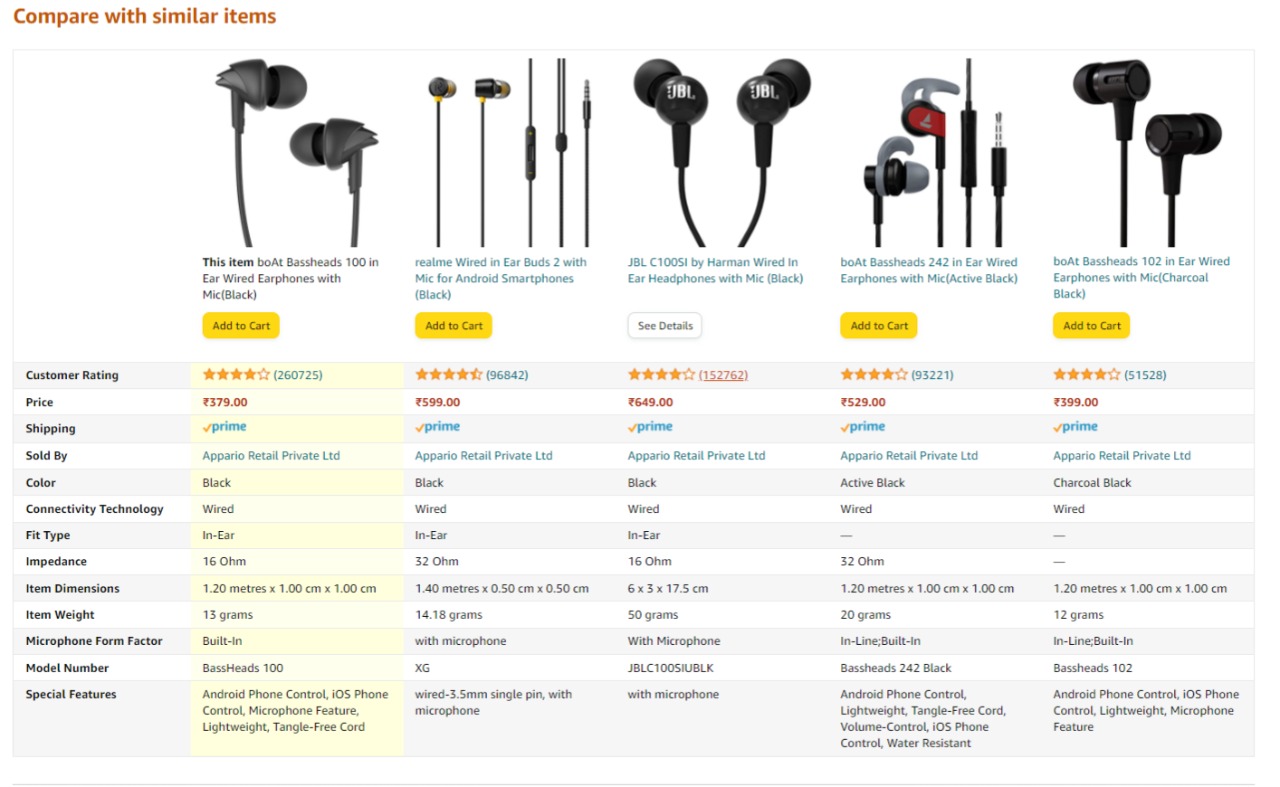
This is a great method of upselling, mostly used by brands that sell electronics and electrical products, where upgrades matter a lot. Let’s take an example of a mobile phone purchase here. When a customer selects a mobile phone model by Samsung, with specific features involving storage, processor speed, camera quality, etc, he/she is shown a module with a slider consisting of similar mobile phones from the same and different brands, but a slightly upgraded version with an increased price.

amazon-compare-list

Since the placement of these products are such that the viewer can immediately compare the look and feel, and the features of the phone with the price difference, there are high chances of him/her picking the upgraded model as they won’t mind shelling out a few extra bucks for a better model.

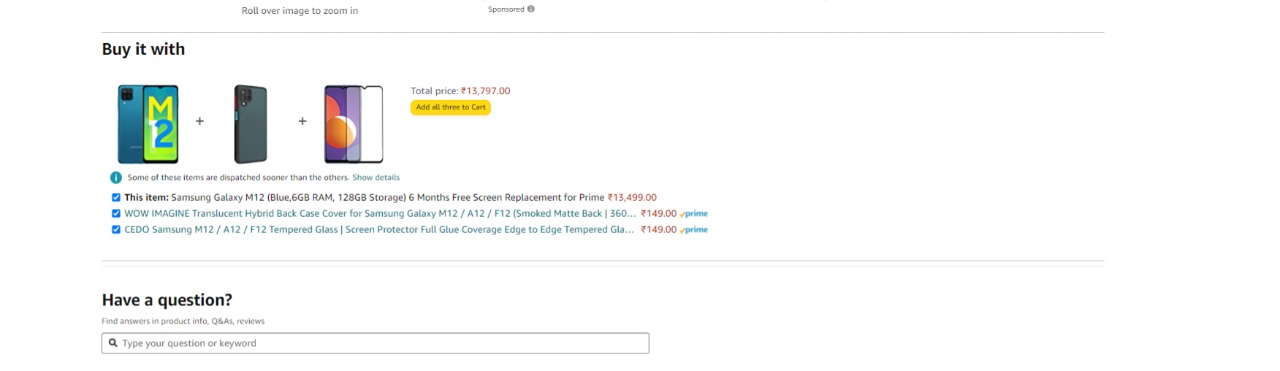
Frequently bought together

amazon-Q&A

The idea here is to sell supplementary products. Yes, it may sound like the earlier point, but this one applies to almost every type of product, from food, fashion, electronics and even services.

Amazon.in does this the best, even for the smallest product on their website, they will have a suggested product ready to be pitched on their product landing page. For instance, simply try adding peanut butter to the cart. Immediately, you will see the suggestions below, of multi-grain bread and even a butter knife with the title Frequently Bought Together.

Chances are, the customer would add the entire bundle to the cart just like they did for the Shop The Look.

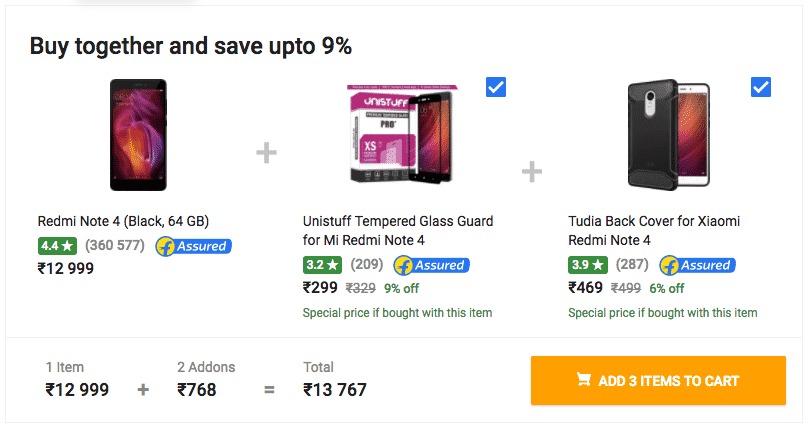
Bundle discounts

Let’s not deny the fact that everyone loves discounts! We’re pretty sure even the richest man in Asia looks for discounts on the peanut butter he orders. Bundle discounts work great when pitched together with the Frequently Bought Together or Shop The Look technique.

discounts on Products

Why does this technique work? Because when a customer buys Product A and Product B separately, he/she might have to pay full price and even separate shipping costs. But when they are offered the main product and the supplementary product for a small yet attractive discount, it forces them to take the deal, since they calculate the discount and the flat shipping rate as savings on the purchase, while the seller gets to increase his/her cart value.

Executing a successful upsell and cross-sell campaign will not only increase the average order value but also improve customer retention. Now that you know how to increase your online sales with such simple tricks, get started!

Or, how about you relax and watch the numbers grow, by hiring ecommerce website developers from the leading software development company, Flora Fountain! Drop us a hello here!

Categories
Ecommerce

How to turn blog traffic into sales on your ecommerce website

The first-ever blog on the internet is believed to have appeared in 1994, and as of 2020, the Growth Badger reported that there were over 600 million blogs globally. Over 60% of internet users engage with some of the other kinds of blogs daily and an average person spends up to 37 seconds reading a blog.

Yes, every figure mentioned here is true and shows how important it is to publish blogs regularly to draw traffic to a website. And when the website in question is an ecommerce platform, there are surefire ways to convert this blog traffic into sales. And 86% of companies produce blog content compared to other formats.

Flora Fountain, an ecommerce website development and design company in Ahmedabad, India has compiled a list of to-dos and tips on how to convert the website traffic from the blogs into leads and paying customers.

Plan the sales funnel

A sales funnel the path a visitor on the website takes, from reading the blog to eventually purchasing the product. If there is not sales funnel planned out for every blog being published on the website, then it is nothing but just some reading material for the website visitor.

Ideally, this is how a Sales Funnel Looks like:

Visitors – Blog Post – Call to Action – Landing Page – Thank You page or pop-up

Now, these visitors can be people who directly clicked and reached the blog, or got drawn to it through other means like social media. From these blog posts, the visitors are prompted to engage with the website through strategically placed Call to Action (CTA) links and buttons. These CTAs can be either a data collection module or a link that leads to a product page. Once the customer makes the purchase or provides his/her data, they are greeted with a Thank You page or a pop-up. This link of sales funnel helps the blogs to be utilised to its full potential.

Create valuable content that the customers want

One of the best ways to convert visitors into a regular readers and eventually, paying customers of the business, is by providing them with content that addresses their pain-points, solves their problems and gives something worth the 5 minutes spent reading the blog.

Ahmedabad-based ethnic fashion brand Ray Ethnic writes blogs which provide their readers with tips and styling tricks for various seasons and occasions, and smartly plugs their products within their content.

This way, the chances of their regular blog readers clicking on the call to action links smartly embedded in the images and on the names of their outfits are increased. These links lead to their product pages with an option to buy online. Check out their blogs here.

Ensure that the blog is readable and accessible on all types of devices

According to a Statista report, in the year 2020, close to 4.28 billion people were accessing the internet using their mobile phones. And it will take hardly 2 seconds for any of this user to abandon a website or a link if it doesn’t open properly on their handheld devices.

Hence, it is necessary to have a responsive ecommerce website in the first place, one which opens seamlessly and runs smoothly on all kinds of mobile devices and browsers too. Secondly, the blogs shouldn’t be too long, otherwise the reader will abandon the blog halfway and leave the sales funnel.

Ideally, a blog should be of minimum 800 words. Because it contains enough word-space plus at least 5 products in it, it takes hardly 3 minutes to read a blog of this size, and that it can be optimized for SEO with the right keywords too.

Make them an offer they can’t refuse

Nobody parts ways with their data without getting something in return. Offering the website visitor something valuable in return for his/her contact information like their email address or contact number is an ideal way to capture leads.

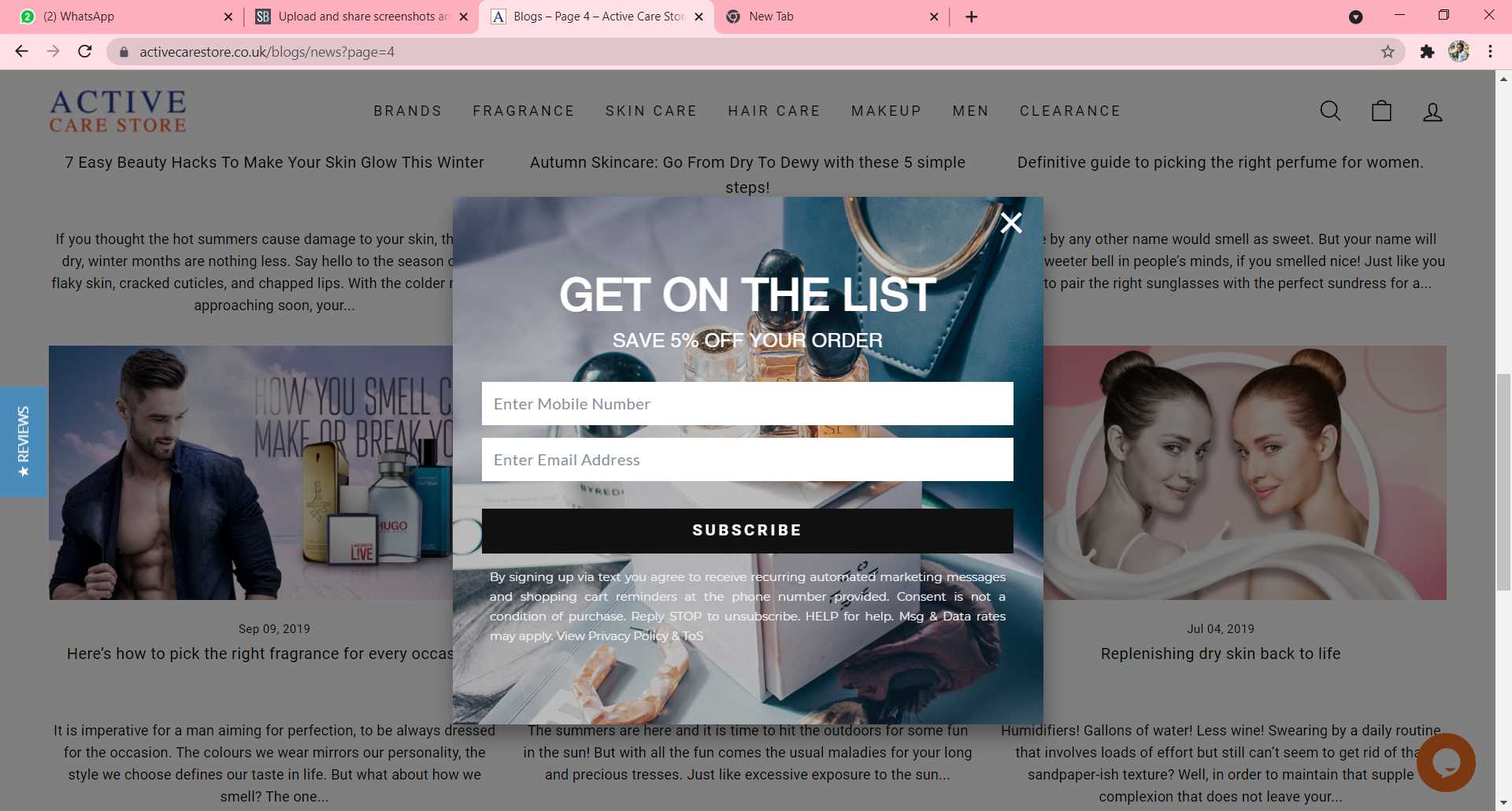
Activecare, a UK-based beauty and lifestyle products website offers a flat 5% off on orders to visitors who subscribe for their mailing list. They do this with an attractive popup that becomes visible within 10 seconds of scrolling through their website blogs.

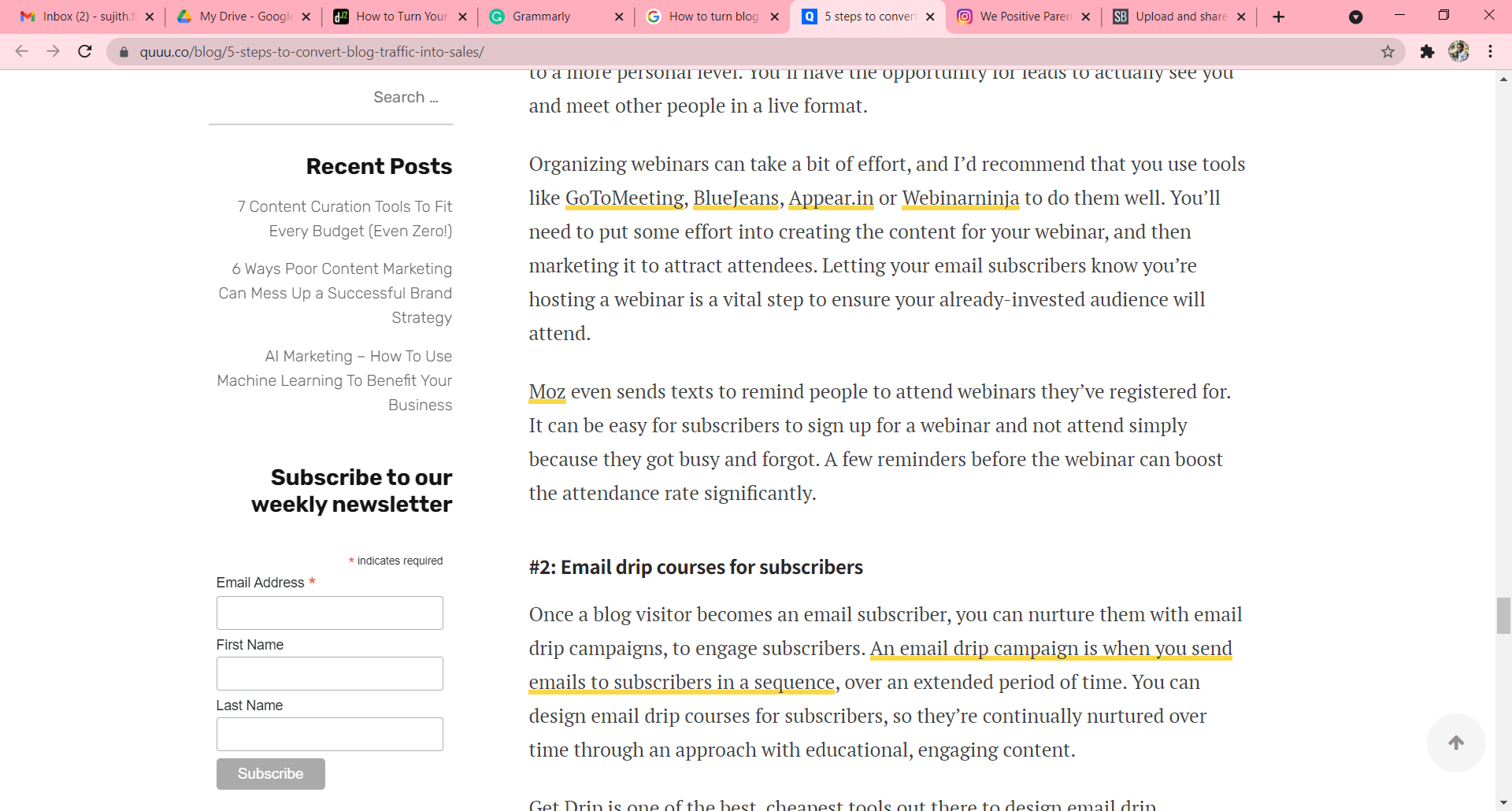
Another way to prompt the readers to provide their information, is by having a static subscription column on the right or left side of the blog. It stays right there, in the visibility of the reader as he/she scrolls along.

Make the most out of the leads

Here’s an interesting fact, 78% of marketers have seen an increase in email engagement over the last 12 months. Which means the chances of people opening and engaging with a well written and mobile-optimized email is higher than them clicking on a social media ad.

When readers provide their contact information to the business, they may not be interested in purchasing something immediately but do wish to come back when they see the right opportunity or deal.

Keep them updated through regular newsletters and messages, informing them about the newest offers, discounts, product launches, or services. This is called a drip campaign, where a business keeps their current and prospective customers engaged for a long period of time. Upon finding the right deal or product, the customers will reach out and eventually make the purchase.

Still wondering how to execute this process? Let the experts do the job. Various local, national and international brands have improved their business online with the ecommerce website design services and content writing services for business blogs from Flora Fountain. Reach out to us, and let us guide you towards the path of success on digital.

Categories
Ecommerce

Increase your online sales through these ecommerce marketing strategies

Marketing plays an important role in driving sales for a business, whether they are offline or online. But the strategies that drive traffic to ecommerce platforms and further convert them into sales are completely different from traditional practices.

Here’s a look into some interesting and proven ecommerce strategies that can help brands sell more through their ecommerce websites. You’re welcome!

Cross selling

One of the most effective ways to increase the cart value of the customer is to cross sell. Cross selling means selling a different product to the customer, either as an alternative or an addition to the product that’s already added to the cart. Ecommerce websites like Myntra and Amazon usually have a section called “Frequently Bought Together” where they show combos of products that complement each other.

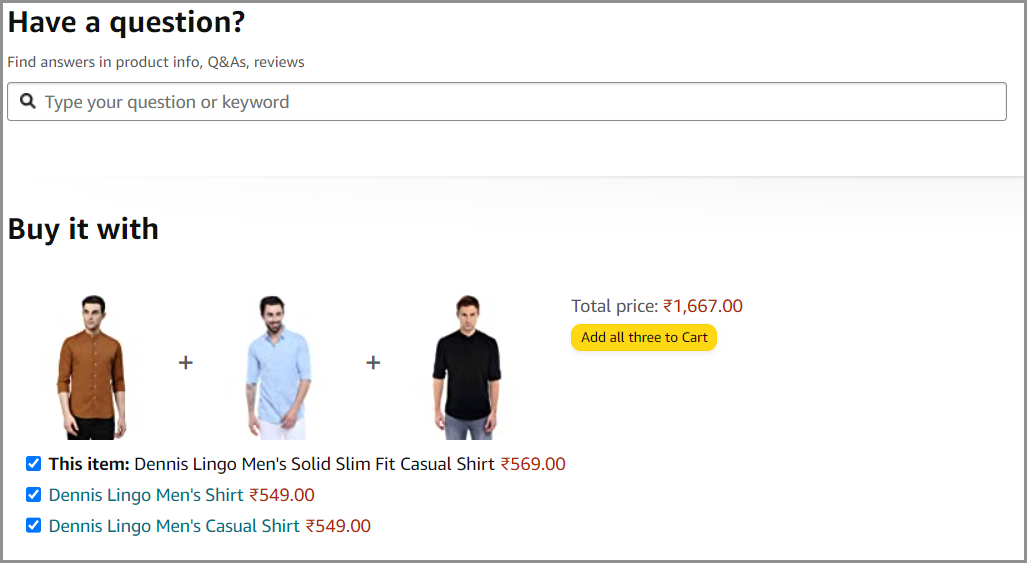
cross selling on e-commerce Amazon.in cross selling multiple shirts on their product pageFor instance, if a customer is looking to purchase a mobile phone online and as they scroll down, it will show a combined price window with a pair of earphones and power bank. It lures the customers into thinking he/she is getting a great deal in purchasing all of three products together.
Build up a sense of urgency

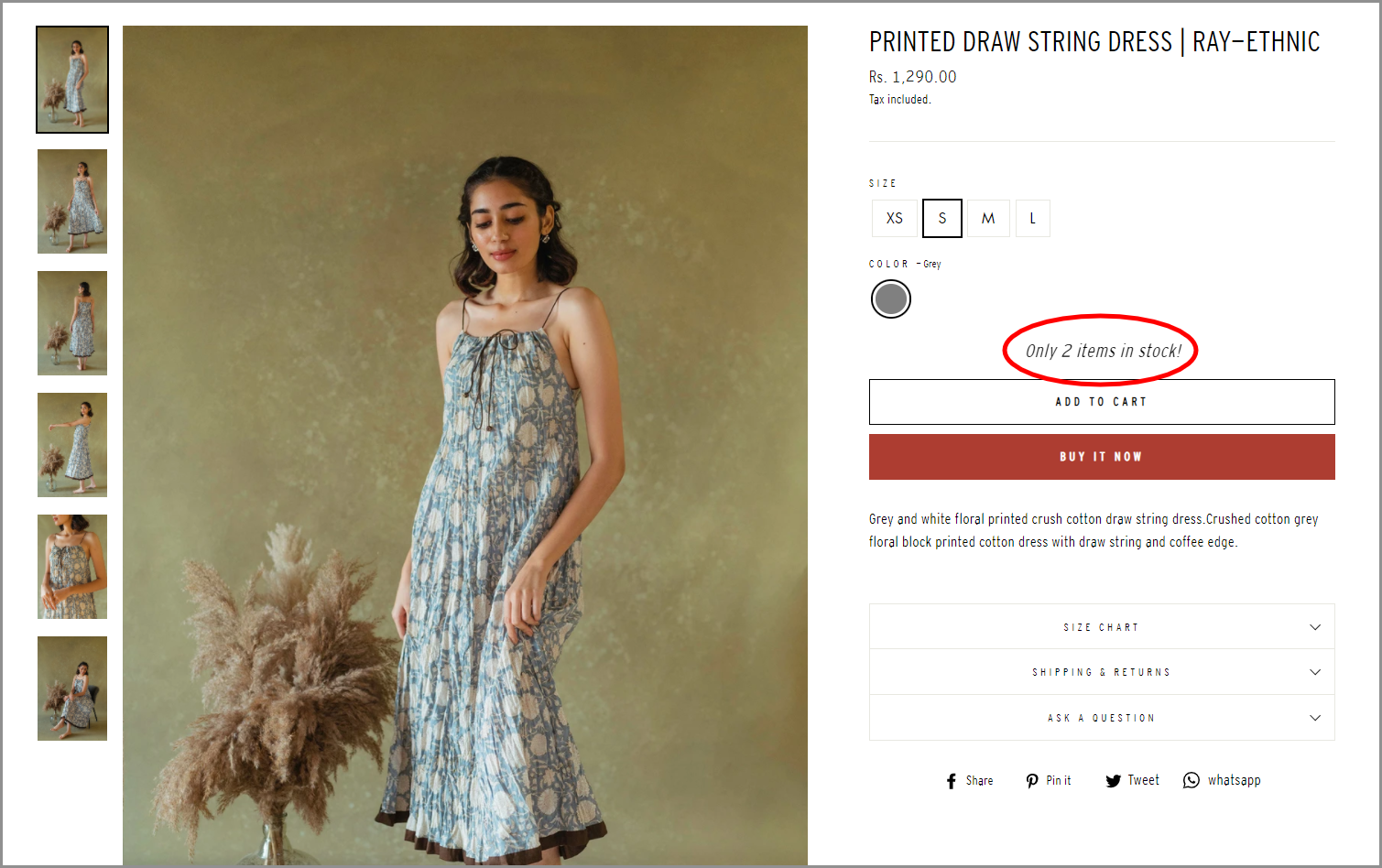
Another great ecommerce marketing strategy to encourage customers to purchase a product is by creating a sense of urgency in their minds, of missing out on buying the said product if they don’t act now or. The idea is to offer the customer a short window to make the decision and have a feeling of getting a great deal out of it.

There are various ways to do it. One of the most commonly practiced methods is to entice them by showing the quickly running out stock levels. When a customer sees that the product they just liked might go out of stock soon, chances are, he/she will end up buying it.

Ray ethnic low stock remaining image creating sense of urgency Rayethnic.com creating a sense of urgency by highlighting high demand of their productsAnother way to create a sense of urgency is to offer a limited period discount or benefit. For instance, Amazon displays a pop-up under many of its products which offers either an attractive price deduction or a free overnight shipping if the customer places an order within X number of hours.

Blogs

Now, this is a long-term strategy which requires quality content and consistency over a period of time, but the benefits are many. Blogging is an effective and proven strategy used by major ecommerce marketing companies in India.

But, how do blogs help?

Blogs are among the best ways to boost an ecommerce website’s organic SEO reach. Blogs give businesses a channel to engage with their regular customers through well written blogs that offer value to them. Just like how Ray Ethnic does with their blogs. They offer fashion tips and product suggestions and promote ethnic fashion through their well written articles.

Ray Ethnic Ecommerce Blogs A variety of blogs on rayethnic.com that talks about fashion tips using their productsBut these aren’t just blogs, they’re smartly written content pieces peppered with relevant keywords that help their website rank higher on the search engine page. This means their visibility increases further when people search for ethnic wear.
Additionally, blogs can be interlinked to relevant products from the inventory, enticing the reader to click on the product link and maybe purchase it too. For instance, a blog that talks about perfumes to be worn during winters, can have one or many products hyperlinked every time the brand or the fragrance is mentioned in the write up.

Offers/Discounts

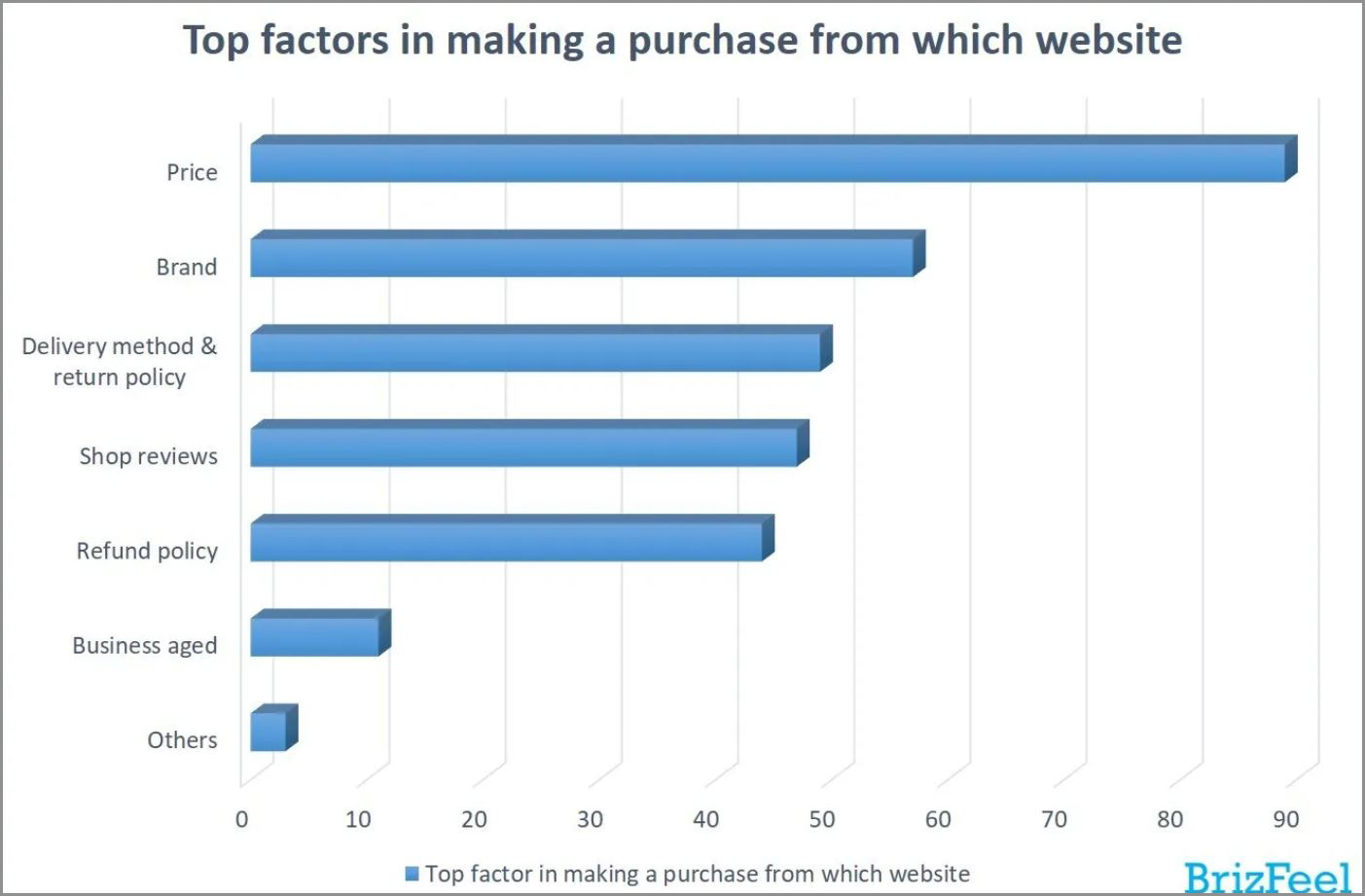
A recent survey by Brizfeel showed that price is a top factor that influences a buyer to purchase something online. Giving the customer the feeling of having grabbed a great deal or saving a good amount of money on a purchase, is one of the best ways to push sales on ecommerce. And everyone loves a sale or a great discount.

Graph showing purchase trends due to offers and discounts Brizfeel research showcasing various aspects that influence shoppers to purchase moreBy regularly having offers like “The End of Season Sale” for lifestyle brands, or a “Buy One Get One Free” offer for FMCG products and food items, the quantitative sales among regular shoppers see a sharp rise. Further, when these regular customers talk to their friends and family about the great discount they availed on the sale, it attracts new visitors to the site, and chances of getting new sales go up.

Reviews

A common trait among all online shoppers is to check what other shoppers like them are saying about their experience with the business and their products. And good reviews always push more sales. The Brizfeel survey above further states that 94% of customers won’t purchase from an online store that has bad reviews.

Encourage positive reviews from customers, to write about their experience with the brand, either on the review columns in the website itself or on platforms like Google Business, Facebook pages, etc. This can be done through a pop up right after they checkout, which prompts the shopper to post a review. They can either be in the form of ratings, e.g. how many stars out of 5 or a small text box that posts the review publically immediately.

These are proven strategies that have increased sales, improved visibility and strengthened the brand positioning of many ecommerce businesses in India and internationally. Implementing them in your ecommerce sales strategy will definitely bear fruit.

Loved what you just saw? Let’s get it started on your ecommerce website too. Get in touch with Flora Fountain, a full-service digital agency offering Ahmedabad’s best ecommerce website design and development services to various national and international brands across the spectrum.

Categories
Ecommerce

Shopify, WooCommerce or Magento: Which is the right ecommerce platform for your online store?

Looks like you’ve decided to go digital and sell online! Congratulations! It’s a big step.

But a lot of things right at the start might confuse you. For starters, which ecommerce platform should you start your online journey with? This year everyone seems to be raving about Shopify, last year it was WooCommerce and then someone told you about Magento too. The more you speak with ecommerce website development or digital agencies, the more options there seem to be and the more confusing it gets.
So here’s a definitive guide to understand the pros and cons of using each of these 3 major ecommerce platforms, depending on what, how much and who you are selling to…

So, what is Shopify?

While it might seem new, Shopify has been around as an ecommerce platform since 2007. Despite being a paid only solution, it is the second most popular ecommerce platform with about 20% of the market share. A major reason behind this is that it is a software-sold-as-a-service, which means you don’t have to be a coder to set up a Shopify store.

And Magento?

Magento is the big daddy of customizable e-commerce platforms. It has two services, a free Open Source and a paid Magento Commerce, which like Shopify comes with hosting services. With about 500,000 users, Magento has 10% of the online market, including bigger brands that are into serious online retail of clothes, jewellery and even cars.

And finally we come to WooCommerce?

With 29% of the market share, WooCommerce is the most widely used e-commerce platform. It is actually a plugin for WordPress that extends the functionality of this very popular CMS into an online store.
Still wondering which platform to pick? Read on…

Ease of use

This one is especially important for small business owners, as they end up initially doing a lot of the work on their own.

Ease of use

Of the three, Shopify is the easiest to set up and use. It comes with a managed hosting solution, well-designed themes both free and paid, PCI compliance for payments, and a host of shipping solutions already built by logistics companies – all of which can be integrated without coding knowledge. This means all you have to do is buy a domain, connect it with your Shopify account, select a theme, upload products and get ready to sell online.

This one is especially important for small business owners, as they end up initially doing a lot of the work on their own.

WooCommerce on the other hand requires the user to have their own hosting solution, which needs to be purchased before getting started. So you have to buy your own domain, hosting solution, install WordPress and WooCommerce, before you can start customizing themes or entering products. This makes it not quite as easy as Shopify, however, it does give you more choice in selecting your own server. Because of a vibrant community, WordPress also has a wider selection of free and paid themes available online.

Magento is the platform of developers. While it has its own hosting solution, you can also use the Open Source version and connect it with a server of your choice. Getting Magento set up and customizing it requires developers who have knowledge of PHP and HTML.

Customizability

Customizability is almost inversely proportional to ease of use in this case. With Shopify being the most closed platform and offering the least customization. One can customize CSS for the look and feel of the website and use existing app or create new Shopify apps for certain limited customization. Several workflows like the cart page can not be customized at all in the starting plans.

Customizability

Magento, on the other hand, allows for the most customization from the product page to the payment workflow to the user profiles. For some common functionalities, Magento addons are also available in the marketplace. This is the reason most bigger brands that take online retail seriously, choose Magento.

WooCommerce is also fairly customizable, since it sits on the open-source platform of WordPress that is supported by a thriving community. Most of the features you might want to add are already out there as free or paid extensions to the plugin, created either by WooCommerce creators or the WooCommerce community.

Scalability

Scalability

Magento and Shopify are slightly better suited for large databases of products since they are e-commerce first platforms. With Shopify, while adding products does not impact performance, scaling up does become more expensive as your store grows with more users and transactions.

Scalability of products with WooCommerce is possible, however, since it was created as a content platform, adding too many customizations or products without thoughtful technical architecture can impact performance and slow the website down. As a result, you have to hire WordPress developers who are familiar with optimizing the platform as you scale up.

Security

Shopify’s hosting comes with an SSL certificate and PCI compliance making it watertight and secure. With WordPress and Open Source Magento, you have to purchase your own SSL certificate and keep updating any security patches or extensions that the two platforms release from time to time. This is a fairly common practice for most open source software, so it is not a major concern, however, it does require developer help.

Security

SEO Friendliness

SEO Friendliness

Shopify comes with basic SEO support with the ability to add meta tags, image alt text, generate 301 redirects, automatic XML sitemaps and a blogging feature. However, customizing any of this in the basic plan is not possible.

WooCommerce comes with all the above plus the ability to integrate with mature SEO plugins like Yoast for that extra boost to your store’s SEO, by adding keywords per page, real time suggestions for keywords and more!

Magento being the completely customizable platform that it is allows you to define your own SEO strategy and customize the backend to support all of the above features in Yoast and then some, like canonical tags, Google sitemaps, no follow links and literally anything your SEO expert desires.

Support

Being a paid platform, Shopify has quite an attentive and prompt 24×7 support desk available over email for all plans. It also has a pretty comprehensive documentation and, being the second most-popular platform, a thriving community of developers.

WooCommerce has possibly the biggest community of developers helping each other and clients out. One of the benefits of such a community for smaller businesses is that you can hire a WooCommerce developer for parts of the project or some specific functionality quite easily from these forums.

Support

Moreover, pretty much anything you imagine in WooCommerce has probably already been done and put out as a plugin by someone in the community!

Magento is a mixed bag. While Magento Open Source has a community like WooCommerce, Magento Commerce provides prompt support for its paid users, similar to Shopify.

Pricing
Pricing

Shopify provides three different plans ranging from $29 to $299, which includes hosting services. If you are going for a paid theme, this can cost anything up to $180. And finally, there is a transaction fee anywhere from 0.5-2% depending on your Shopify plan. This makes it ideal for a beginner user, but a little more expensive as you scale up and increase your transactions.

WooCommerce and WordPress are essentially free of cost, however, you end up paying for your own server and SSL certificate. Any plugins required for additional functionality should also be factored in.

Magento Open Source is similar to WooCommerce in being open source and requiring server and SSL. Magento Commerce however is for serious online players since its licensing fee starts at $22,000.

The Final Word

To conclude, if you are just starting out online with a limited monthly budget and a whole lot of DIY spirit Shopify is perhaps your best bet. You can play around with themes, make minor changes to the look and feel, add a payment gateway, integrate with a shipping provider, add products and get started within a few weeks, even days.

However, if you plan to build a slightly more customized website and have the financial bandwidth to hire 1 or 2 developers, WordPress with WooCommerce, can work better for you.

For bigger organizations with a long-term online vision, thousands upon thousands of customized products and a free hand with budgets, Magento is the most future proof and customizable solution.

Need more guidance getting started with setting up your own e-commerce store? Get in touch with Flora Fountain, we are good listeners and even better problem-solvers for all your digital marketing and e-commerce needs. Call now, for a free consultation for your online business.