Categories
Branding Services

From business to brand. It’s not just about the logo

Let’s make it bigger.

Can you make it the same but in pink / yellow / blue / green?

Dekh ke maza aana chahiye!

If you have given or received such feedback, you know what we are going to talk about today.

Yes, LOGOS! Every time there’s a conversation around brand building, the first thing that comes to mind after a brand name is the logo.

Discussions over logos notoriously take over branding meetings, leaving precious little for the other crucial aspects of business promotion and advertising. And it’s time to realize that … a brand is more than just its logo. A brand is a living entity that walks, talks, grows and influences the people around it. Wish to know what makes your business a brand? Scroll down!

Your brand must have a PURPOSE
PURPOSE

So, what does your brand deliver? What does it want to be? Who does the brand speak to? Who should sit up and notice the brand? How would your ideal customer describe your brand? If you never asked these questions about your brand, then you must NOW.

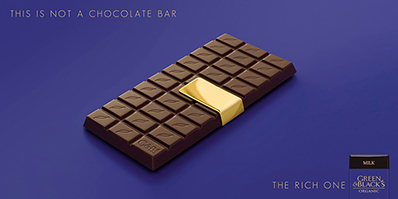
For instance, your business might be that of making artisanal chocolates; but what it actually does as a brand is provide joy to the consumer, the experience of enjoying a delicious treat. That is the actual purpose of the said chocolate business.

Similarly, every brand has its purpose, a problem it solves, and questions it provides answers to. By defining this PURPOSE, the mission and vision of your business is formed. And this should be the first step you take in the process of branding, even before you think of a logo.

Your brand has a PERSONALITY

If your brand was a person, who would it be? How would he/she dress, what would be their favourite food, in which language would they talk? These questions help you define a personality for your brand. And when your brand has a personality, it is able to connect with the kind of people it wishes to serve.

So, how do you want your brand to be?

PERSONALITY

Approachable, genuine, validating and emotional, having an impact on the customer every time he/she engages with it.

Basically, MAKE YOUR BRAND HUMAN. To come up with a personality for your brand, you must…

  • First consider the purpose and the message you want to convey.
  • Study your competition and think of what will make your brand stand out from them.
  • Come up with adjectives and phrases that describe your brand, like, Sophisticated yet Rugged, Intellectual but Street Smart, Honest and Friendly.

See what we did there? This is how you define your brand’s personality.

Use VISUALS to convey your brand’s PURPOSE and PERSONALITY

What comes into your mind when you visualize a 3-pointed star inside a circle? Mercedes, right? What comes to your mind when you imagine the colour red? Coca Cola, Ferrari, KFC…. You get the drift.


KFC
mercedes

Once your brand’s purpose and personality is defined, it’s time for strategy on how to convey it to your existing customers, and the ones who could become one in future upon engaging with the brand.

A strong visual element is important for every brand, to leave an imprint on its customer. And for this, you must pick an attractive colour palette, an identifiable font family and graphics that support the brand’s persona. These visual elements like colour are the silent ambassadors of your brand.

Your brand has its own VOICE

Now, this is where the language comes into play. And no, we aren’t just talking about linguistics here. But the conversational style of the brand, the way it speaks to its consumers.

VOICE

The purpose and personality comes into the picture here again, as they decide the style in which the brand will talk. Is your business providing facts to its end user? Then the tone of the brand is going to be informative and very formal, like Encyclopedia Britannica.

But at the same time, a brand named Diply Facts on Instagram does the same thing, but its language is polar opposite to Britannica. Why? The audience, their age groups and the purpose behind the end product is different from each other.

While the former is used by students, academicians and writers for educational purposes, the latter is used by a younger, casual audience for informal activities like sharing with friends on social media.

Now that you know that building a brand goes much beyond creating a logo, simply hiring a graphic design or logo design company to create one is not enough. You need a creative agency that specializes in branding. Wondering where to find one? Click here to get in touch and start a conversation with us at Flora Fountain!

Categories
Ecommerce

Shopify, WooCommerce or Magento: Which is the right ecommerce platform for your online store?

Looks like you’ve decided to go digital and sell online! Congratulations! It’s a big step.

But a lot of things right at the start might confuse you. For starters, which ecommerce platform should you start your online journey with? This year everyone seems to be raving about Shopify, last year it was WooCommerce and then someone told you about Magento too. The more you speak with ecommerce website development or digital agencies, the more options there seem to be and the more confusing it gets.
So here’s a definitive guide to understand the pros and cons of using each of these 3 major ecommerce platforms, depending on what, how much and who you are selling to…

So, what is Shopify?

While it might seem new, Shopify has been around as an ecommerce platform since 2007. Despite being a paid only solution, it is the second most popular ecommerce platform with about 20% of the market share. A major reason behind this is that it is a software-sold-as-a-service, which means you don’t have to be a coder to set up a Shopify store.

And Magento?

Magento is the big daddy of customizable e-commerce platforms. It has two services, a free Open Source and a paid Magento Commerce, which like Shopify comes with hosting services. With about 500,000 users, Magento has 10% of the online market, including bigger brands that are into serious online retail of clothes, jewellery and even cars.

And finally we come to WooCommerce?

With 29% of the market share, WooCommerce is the most widely used e-commerce platform. It is actually a plugin for WordPress that extends the functionality of this very popular CMS into an online store.
Still wondering which platform to pick? Read on…

Ease of use

This one is especially important for small business owners, as they end up initially doing a lot of the work on their own.

Ease of use

Of the three, Shopify is the easiest to set up and use. It comes with a managed hosting solution, well-designed themes both free and paid, PCI compliance for payments, and a host of shipping solutions already built by logistics companies – all of which can be integrated without coding knowledge. This means all you have to do is buy a domain, connect it with your Shopify account, select a theme, upload products and get ready to sell online.

This one is especially important for small business owners, as they end up initially doing a lot of the work on their own.

WooCommerce on the other hand requires the user to have their own hosting solution, which needs to be purchased before getting started. So you have to buy your own domain, hosting solution, install WordPress and WooCommerce, before you can start customizing themes or entering products. This makes it not quite as easy as Shopify, however, it does give you more choice in selecting your own server. Because of a vibrant community, WordPress also has a wider selection of free and paid themes available online.

Magento is the platform of developers. While it has its own hosting solution, you can also use the Open Source version and connect it with a server of your choice. Getting Magento set up and customizing it requires developers who have knowledge of PHP and HTML.

Customizability

Customizability is almost inversely proportional to ease of use in this case. With Shopify being the most closed platform and offering the least customization. One can customize CSS for the look and feel of the website and use existing app or create new Shopify apps for certain limited customization. Several workflows like the cart page can not be customized at all in the starting plans.

Customizability

Magento, on the other hand, allows for the most customization from the product page to the payment workflow to the user profiles. For some common functionalities, Magento addons are also available in the marketplace. This is the reason most bigger brands that take online retail seriously, choose Magento.

WooCommerce is also fairly customizable, since it sits on the open-source platform of WordPress that is supported by a thriving community. Most of the features you might want to add are already out there as free or paid extensions to the plugin, created either by WooCommerce creators or the WooCommerce community.

Scalability

Scalability

Magento and Shopify are slightly better suited for large databases of products since they are e-commerce first platforms. With Shopify, while adding products does not impact performance, scaling up does become more expensive as your store grows with more users and transactions.

Scalability of products with WooCommerce is possible, however, since it was created as a content platform, adding too many customizations or products without thoughtful technical architecture can impact performance and slow the website down. As a result, you have to hire WordPress developers who are familiar with optimizing the platform as you scale up.

Security

Shopify’s hosting comes with an SSL certificate and PCI compliance making it watertight and secure. With WordPress and Open Source Magento, you have to purchase your own SSL certificate and keep updating any security patches or extensions that the two platforms release from time to time. This is a fairly common practice for most open source software, so it is not a major concern, however, it does require developer help.

Security

SEO Friendliness

SEO Friendliness

Shopify comes with basic SEO support with the ability to add meta tags, image alt text, generate 301 redirects, automatic XML sitemaps and a blogging feature. However, customizing any of this in the basic plan is not possible.

WooCommerce comes with all the above plus the ability to integrate with mature SEO plugins like Yoast for that extra boost to your store’s SEO, by adding keywords per page, real time suggestions for keywords and more!

Magento being the completely customizable platform that it is allows you to define your own SEO strategy and customize the backend to support all of the above features in Yoast and then some, like canonical tags, Google sitemaps, no follow links and literally anything your SEO expert desires.

Support

Being a paid platform, Shopify has quite an attentive and prompt 24×7 support desk available over email for all plans. It also has a pretty comprehensive documentation and, being the second most-popular platform, a thriving community of developers.

WooCommerce has possibly the biggest community of developers helping each other and clients out. One of the benefits of such a community for smaller businesses is that you can hire a WooCommerce developer for parts of the project or some specific functionality quite easily from these forums.

Support

Moreover, pretty much anything you imagine in WooCommerce has probably already been done and put out as a plugin by someone in the community!

Magento is a mixed bag. While Magento Open Source has a community like WooCommerce, Magento Commerce provides prompt support for its paid users, similar to Shopify.

Pricing
Pricing

Shopify provides three different plans ranging from $29 to $299, which includes hosting services. If you are going for a paid theme, this can cost anything up to $180. And finally, there is a transaction fee anywhere from 0.5-2% depending on your Shopify plan. This makes it ideal for a beginner user, but a little more expensive as you scale up and increase your transactions.

WooCommerce and WordPress are essentially free of cost, however, you end up paying for your own server and SSL certificate. Any plugins required for additional functionality should also be factored in.

Magento Open Source is similar to WooCommerce in being open source and requiring server and SSL. Magento Commerce however is for serious online players since its licensing fee starts at $22,000.

The Final Word

To conclude, if you are just starting out online with a limited monthly budget and a whole lot of DIY spirit Shopify is perhaps your best bet. You can play around with themes, make minor changes to the look and feel, add a payment gateway, integrate with a shipping provider, add products and get started within a few weeks, even days.

However, if you plan to build a slightly more customized website and have the financial bandwidth to hire 1 or 2 developers, WordPress with WooCommerce, can work better for you.

For bigger organizations with a long-term online vision, thousands upon thousands of customized products and a free hand with budgets, Magento is the most future proof and customizable solution.

Need more guidance getting started with setting up your own e-commerce store? Get in touch with Flora Fountain, we are good listeners and even better problem-solvers for all your digital marketing and e-commerce needs. Call now, for a free consultation for your online business.

Categories
Social Media

How colours are the silent ambassadors for your brand

There are so many instances where one sees a colour and associates it with or recognises the brand. The colours not only help bring out the personality of the brand but it also helps evoke an emotional connection. It attracts people and lets them know more about you. Whether you are starting or expanding your company, here are some key points you should have in mind.

The right colour matters!

 brand personality

Call it colour psychology, but according to research, customers will make a subconscious decision based on colours. One has to choose their brand and logo colour wisely and see what message they deliver indirectly. The colours represent the brand personality which can range from being feminine or masculine, playful or serious, modern or classic, loud or subdues etc. The colours attract customers to choose you. For example-

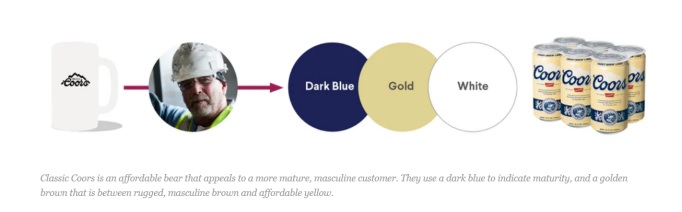
The famous Starbucks, with its green colour makes it look rich, welcoming, friendly, and healthy. A lot is translated about their coffee and services.

Dark blue is heavily seen in a lot of motor and technology brands. The corporates love it but don’t forget the medical and healthcare industry which uses light blue. It is a safe colour as research shows that a lot of people’s favourite colour is blue.

Starbucks logo
McDonald’s logo

One can never forget to mention McDonald’s. The yellow catches the eye immediately and is visible clearly in daylight while the red is an active colour. Well, yellow is also related to happiness. You can spot other food brands too using red in their logos. Your colours communicate what you stand for. Knowing what the colour denotes in different cultures and places is important.

How to choose the right colours?

After you have decided on what your brand wants to emote and what your personality is, you have to decide on the background, base and accent colour. Looks like a lot, but it’s not. Consider this a method for you to arrive at the right colours for your brand. With a wide range of colour options, your brand requires the right shade. Hence, deciding on the background, base and accent colour is important.

  • Your background colour scheme has to have options.
  • The base colour shows your personality and appeals to the target audience.
  • The accent colour has to complement and pair well with your background and base colour.
background logo colours

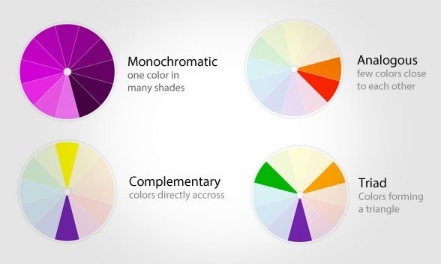
For the logo design you can spin the wheel. Take a look at the picture and see where you fit in, which shade and colour is right for you.

  • Monochrome when you are focusing on one personality trait.
  • Analogous is safe as you convey the same meaning and connotations.
  • Complementary colours would mean bold and dynamic visuals.
  • Triadic colours are stable but one has to see if it matches the brand personality.
logo design

Colourful names

Own your colour and its name too. It has been found that quirky and fancy colour names are more pleasing to people. Even though people were shown the same colour, mocha is preferred over brown. The colour brown can be bifurcated in cinnamon, cedar, brunette, tawny, tortillas, chocolate, gingerbread etc. Naming your unique colour makes it stand out. Create your own colour palette to establish the identity.

On the whole visuals affect the consumer. As a brand, one has to build trust and loyalty through its colours. It is important to analyse your competitors, know what your brand stands for and what personality traits it emotes. Choosing the right colour and associating it with your brand requires variations and background, base and accent colour. Making the right mixture and naming it is crucial. People are attracted to fancy names.

Flora Fountain provides branding and logo services. We help you build and enhance your logo designs too. Leading business into the new creative ventures and reaching success. There is no right or wrong, it is all about exploring and creating one’s colour palette. Get in touch with us today to know which colours suit your brand and how it will help you propel your positioning among your customers.

Categories
Social Media

Why DESIGN is the hero of your digital marketing strategy

Social media is no longer a child’s play. With more people having access to high speed internet connected to devices with the latest technology, a mere text post will get lost in the sea of millions of pieces of content being put out online daily. And this is where your design intelligence makes your stand out from the herd.

The idea behind a design

There is no dearth of written marketing content trying to sell you things online on websites though blogs and articles, but what sets the social media apart is its fusion of visuals and text. And in order to garner the attention of a potential consumer, one must use these elements in balance to create an impeccable design that speaks to him/her.

By picking the right colour and font for your brand and using them consistently in your designs, you convey the mood, meaning and feeling of the brand, and thus targetting a specific set of audience. And when you fit all this together with your content in the right copy space, you are effectively delivering your message to the consumers.

social media image size

Size matters (a lot!)

One of the biggest mistakes businesses make in order to save costs on design (BTW, a big NO NO!) is create one graphic image or poster for both Instagram and Facebook. But one needs to understand both platforms have different post sizes for both desktop and mobile. This is to provide the user with the best quality in visuals of the graphics.

If one doesn’t optimize their posts according to the social media platforms, the image or graphic will pixelate, thus killing the design and the entire message you wanted to convey. Given below are the sizes one should use while designing for Facebook and Instagram

Facebook Post: 940 X 788 px
Facebook cover: 820 X 312 px (desktop) & 640 X 360 px (for mobile)
Stories & IGTV: 1080 X 1920 px
Instagram Post: 1080 X 1080 px (Square), 1080 X 1350 px (Portrait) & 1080 X 608 px (landscape)

More visuals, fewer text

Visuals always have an upper hand over text when it comes to social media. It has been observed that more people respond to images and videos than written content. Hence it is advisable to involve more visuals in your social media marketing.
You will attract more eyeballs when the images are original and the videos have real people in it and not just graphics. Use text only if it is necessary to convey a specific message, like an address, phone number, website or slogan. But make sure your visuals always have space for your logo.

Where to source your visuals from?

While it is important to use original images and videos for visual posts on social media, we understand it is not possible for a small or medium business to spend on a promotional photo shoot for every campaign. And this is where free stock images and videos come to your rescue.

Given below are best sources for you to find high definition videos, images and icons for free and use them to create stunning designs.

Pixabay: With over 4 lakh stock images available for free, this is one of the most sought after sources for images of real people and products.

Unsplash: This website mostly has images from photographers who take artsy snaps and put it out for free use. It has a good source of such images that can go well with a subtle poster for stories and banners.

Pexels: This is a free content aggregator website that displays images and videos from sources where creators put out their content for free, which include Pixabay and Unsplash too.

Videvo: This is a free video source where you can get short video clips perfect for social media, consisting of places, people and products.

How to edit by yourself

While we’d always suggest that you take the services of a professional designer or agency (like us) to create your images and video posts for social media, we understand sometimes you need to pick up the mantle and do stuff by yourself. And if you are someone who does have a basic understanding of colours, fonts and design schemes, then you can use the below tools for a quick edit or post creation.

Canva: This is free photo and video graphic editing tool available for both computers and mobile phones. The best part about this application is that it has some beautiful, predesigned themes for almost all types of social media posts, from banners, posters, stories to covers.

Lightworks: This is a free video editing tool available for desktop, using which you can edit and create good quality videos using its basic tools available for no cost. If you want to use its advanced version, it does have a decent subscription plan.