Vasim Samadji is a partner at Flora Fountain, where he leads the Business and Marketing Strategy divisions. He is a seasoned professional with an MBA in marketing and over a decade of experience working with multiple MNCs. Vasim is a firm believer in the power of creation and he is passionate about cultivating innovative ideas, strategies and trends that shape both individuals and brands.
Armed with market research, digital marketing strategy and branding experience, Vasim has a deep understanding of the human psyche and its effect on consumer behaviour. He is skilled at selling the right product to its target audience at a price that makes both the seller and buyer happy. Vasim's vision for Flora Fountain is to build a community of free-thinkers who foster boundless creativity and bestow even the ordinary with a unique identity.
When not in his dapper suits, Vasim is a closeted poet and has also started an initiative called "An Evening With" which revolves around art of spoken words. He is a lifelong learner who is always eager to explore new ideas and challenges. So far Vasim has worked with more than 100 businesses for various needs and has made significant contributions to their success.
Blogging is one of the most efficient and critical tools for a business to build brand awareness, engage with consumers and develop a strong web presence. It is also a very innovative way of subtly promoting your products and services without spending a bomb on digital ads, which consumers hate anyway. Here are five reasons why you must start posting blogs on your website, and how to go about it.
Drives steady traffic to your websites
According to a HubSpot study, businesses that blog regularly get 55% more visitors than those who don’t. This traffic can be from both new visitors who discovered your business through the blog while doing an online search or surfing social media, and prior visitors who have begun frequenting to your website attracted by the quality content in your blogs.
Both ways, more traffic means more chances of you converting these visitors into paying customers for your service/product. But you have to ensure that what you put out as blogs is relevant to your brand and relatable to the reader so that they return.
Helps with lead generation
With blogs bringing in more traffic, now you have more opportunities to convert every visitor into a potential lead. As per a statistical study, businesses that blog end up generating 67% more leads than their competitors who don’t Nobody would give their email id or phone number right away,
unless you offer them something in return, apart from your blog convincing them that you have what they are looking for. Put out a call-to-action with a small discount or a free consulting session at the end of your blog to improve your chances.
You reap benefits in the long run
According to HubSpot, around 70% traffic and 90% leads that a business generates every month comes from older posts. This happens why you write content that relates to the various challenges and pain-points of a customer of your industry.
Since most of us lookup for “solutions” to our problems on the web, there are more chances of your blog showing up on the screen, despite being posted long back, when your content addresses the issue the customer is trying to resolve.
Just like what Vajra Jewels do with their blogs; With a niche market to cater to, their blogs talk about issues faced by people who own diamonds with blogs on diamond care and tips to distinguish between real and fake diamond. They’re not only serving quality content to their existing customers but targeting similar people on the internet too.
Gives a great boost to the rankings
Since every new blog you post on your website is an indexed page, it stands more chance of showing up on search engines. Your website gets ranked higher than other businesses in the same industry when search engines notice that you update fresh and relevant content regularly. It also allows you to put in keywords that will connect the reader to your business.
Writing blogs is not tough, and posting them isn’t either. If you can operate and post stuff on your social media pages, then posting a blog on your WordPress website is a piece of cake. But if time is the major constraint for you, then you can get professional writing services too, just like the one Flora Fountain offers to write unique, SEO-friendly blogs for your business regularly.
As the world fights corona virus, it’s very essential for a business person to innovate different ways to educate its customers. While everyone is focusing on cost control and reducing marketing activities, here’s what a smart business person can make a huge difference while being at home during lockdown by following 10 simple stes.
Website Health:
Check whether you website is working as it should be Remember your website is your digital store and it is now more important to maintain an A-game.
Branding & Reputation:
Once you are through with website checklist, ask yourself why I built this website? I am sure like most of us the answer is, to market your product and services. But during the lockdown 90% business can’t sell because of logistic challenges and hence at this point we can focus on proper branding and reputation management.
Which Platform to target?
To do proper branding or marketing you must be visible to the world out there on social media platforms and hence it is important to play on your strengths and identify which platforms to target.
Ask yourself where is my audience?
It is important to understand and create audience profiling. Age, sex, interest, geography, income etc are some important factors to consider. Instagram is for young people, Facebook is a community based application and has mix audience, Youtube is a video based application which focuses on awareness & education, Twitter & Linked is for B2B, Pinterest is for portfolio building and Tiktok is used to target town and suburb audience with video.
Optimize the profile/page
If you are a small business then creating an id (profile) is advisable against creating the page. If you are comparatively an established brand than create page on facebook and profile on other platforms. Please optimize your profile by mentioning all the details about the company.
Hey,
Need a Free
Consultation
Follow the right influencers
In order to create a strategy for your brand you need to remain up-to-date with latest trends of the industry and what actually attracts people. Following right influencers (people who know the industry and influence buying decisions) can sometime lead into collaboration as and when opportunity arises.
Share content regularly
Content is what we put out on social media platforms. Which can be combination of Image, Text or Video. Remember, don’t be too technical and don’t try to sell immediately. Educate your followers about your product, industry, benefits etc.
Use proper hashtags
In order to grow followers you need to reach maximum audience and that can be done by using proper hashtags for your post. You can use any number of hashtags between 3 to 30 in your copy as well as comment section. To know trending hashtags about your business visit www.all-hashtag.com
Interact with your followers
All successful brands care about their followers and hence they keep a track on their activities. Sometimes a simple thank you can convert follower into fan and future buyer. Communication is an essential tool once your page/profile is up and running.
Be patient
Remind yourself that you are here to educate and spread awareness about your product/services. Don’t be impatient by pressurising yourself to generate leads or business in initial months. If you follow above 9 points diligently then business is bound to happen.
When it comes to online advertising, two major ad platforms dominate the field: Facebook Ads and Google Ads. These advertising platforms have revolutionised the way businesses promote their products and services online. However, choosing the right ad platform for your business is crucial. Should you go for Facebook’s extensive targeting options and social media reach or opt for Google’s vast search network and intent-based targeting? Let’s dive deep into Facebook Ads vs. Google Ads, exploring their strengths, weaknesses and key differences to help you make an informed decision on which platform is best suited for your advertising goals. Get ready to discover the power of precision targeting and effective ad campaigns!
When it comes to advertising online, both platforms offer unique opportunities to connect with the target audience, drive brand awareness and achieve marketing goals. While Facebook Ads is a social media driven platform, Google Ads is a search engine focused platform. The experts at Flora Fountain, a digital marketing company, have broken down the mechanics of Facebook Ads and Google Ads into a simple to understand guide below.
Facebook Ads for Businesses is an advertising platform provided by Facebook that allows businesses to create targeted ads to reach their desired audience on Facebook and its affiliated platforms, such as Instagram feeds and stories. It offers a range of ad formats, advanced targeting options based on user demographics and detailed analytics to help businesses increase brand awareness and achieve their advertising goals.
Paid promotions help businesses reach a larger audience digitally
Google Ads for Businesses is an online advertising platform offered by Google that enables businesses to display ads on Google’s search engine results pages, websites and mobile apps. It allows businesses to reach their target audience through targeted keywords, demographics and interests, helping them increase visibility, drive website traffic and generate leads or sales.
Facebook Ads vs. Google Ads: A comparison
Facebook Ads and Google Ads are like two cool kids of the advertising classroom, each with their own unique skills. Let’s break it down and compare them so you can decide which one suits your business needs best.
1. Cost
Facebook Ads for businesses operates on a “pay-per-impression” basis. Which means you pay each time your ad is viewed by someone online on social media. The cost depends on things like your target audience, the quality of your ad and the level of competition. On the other hand, Google Ads mostly use a “pay-per-click” model. You pay for each click your ad gets. The cost of clicks in Google Ads is influenced by factors like how competitive the keywords are, the ad quality and its relevance. Since Google’s clicks are more intent-driven, the clicks end up being more expensive than the views of a more passive user offered by Facebook. The cost of customer acquisition (CAC) too is higher in Google. As an experienced SEO company in Ahmedabad, Flora Fountain has been helping many ecommerce businesses attract potential customers to their online stores via Google Ads.
2. Audience Reach
Facebook Ads allows targeting users based on demographics, interests, behaviours and even custom audiences. Google is the popular kid in town. It is the world’s most-used search engine, processing billions of searches every day. This vast network of Google provides advertisers with access to a wide range of users actively searching for products or services. Simply put, Facebook Ads are for businesses who want to reach people based on their interests and behaviour, while Google Ads for businesses helps target users who are searching for that specific product or service online, right at that moment.
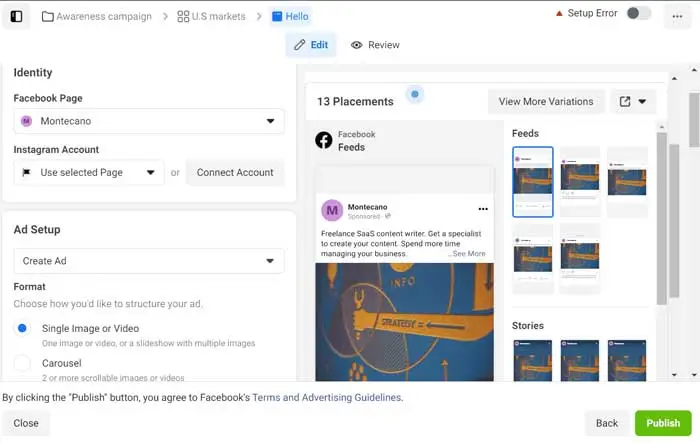
There are many factors that affect the performance of an ad on Facebook
3. Ad Placements
Facebook is that magician who can make your ads appear in different places within their platform. You can show your ads in the Facebook News Feed, Instagram Feed, Instagram Stories, Audience Network (which includes external websites and apps) and even in Messenger. It’s like a seamless blend of your ads into the user’s browsing experience. On the other hand Google Ads helps businesses to display ads in search results, on websites within the Google Display Network and on YouTube. Your ads could pop up right alongside search results or be displayed next to relevant content on partner websites and YouTube videos. So, it is important to understand which platform your intended audience is more likely to use, Facebook/Instagram or Google/YouTube.
4. Ad targeting
Facebook has a treasure trove of user data, allowing you to create super-specific audience segments whereas Google Ads relies mainly on keywords to match ads with relevant search queries. It also offers additional targeting options like demographics, location and device targeting. While Google doesn’t offer the same level of detail as Facebook in terms of user interests and behaviours, it makes up for it by capturing users when they’re actively searching for something.
5. Ad formats
Facebook Ads for businesses is all about impressing users with their variety of ad formats. You can choose from image ads, video ads, carousel ads (where you can swipe through multiple images), collection ads (showcasing a group of products) and lead generation ads. These formats are designed to catch users’ attention and provide an interactive experience right in their social media feeds. On the other hand, Google Ads offers formats like text ads, display ads, shopping ads (perfect for online stores), video ads and app promotion ads. Regardless of format or platform, visuals are an important part of driving conversions on both platforms. Performance marketing companies often work with a graphic design agency to help businesses run effective ad campaigns.
Choosing the right platform for your business
Here are some points for you to consider when stuck in the dilemma of Facebook Ads vs. Google Ads.
Consider your goals: Think about what you want to achieve with your marketing. Do you want to spread the word about your brand and get people engaged? Then Facebook Ads is the go-to for your business! It’s like having the superpower to reach a specific target audience based on their interests, behaviours, and demographics. For example, if you want to target millennials who are Bollywood fans, or young adult males who follow the English Premier League closely, for your retail brand, Facebook is the way to go. On the other hand, if you want to capture those active seekers who are hunting for your products or services, driving traffic to your website and boosting conversions, Google Ads is where the magic happens! For example, if you want to target corporates looking to buy a SaaS product or a business-owner looking for an SEO company in Ahmedabad to build an optimised website and promote it organically through search engine optimisations, then Google is the way to go.
Analyse your target audience: Time to put on your detective hat and analyse your target audience’s online behaviour. If they’re serial Facebook or Instagram feed scrollers liking, commenting and sharing content, it’s a sign that Facebook Ads are best for your business. But if they’re busy typing away on Google, searching for solutions or products, or if they watch hours of videos on YouTube everyday, you want to be part of their online journey! Google Ads for businesses can help you reach them at the right moment.
Budget considerations: Money talks, right? Consider your budget and the cost of advertising on each platform. Facebook Ads for businesses generally come with a lower cost per click (CPC), making it a cost-effective choice for brand awareness campaigns. On the flip side, Google Ads, especially for the more popular keywords, will cost more per click, but it often delivers better conversion rates. So, find the ad platform that aligns with your budget and objectives.
Competitor analysis: It’s time for some undercover work! Take a sneak peek into a successful competitors’ digital marketing strategy. Are they ruling the Facebook Ads kingdom or conquering the Google Ads empire? Since you are both targeting the same audience, studying their moves and success, can uncover valuable insights about which platform will work wonders for your business.
As a branding agency in Ahmedabad, Flora Fountain has helped many local and national level businesses to tap into the right audience and achieve their business goals.
Concluding thoughts…
Leave behind the rivalry between Facebook Ads and Google Ads because they actually complement each other perfectly! Let’s break it down: Facebook Ads act as your brand’s cheerleaders, while Google Ads can work as the lead generating workhorses for your business. But here’s the exciting part! When you partner with a digital marketing agency like Flora Fountain, you can leverage the power of both these incredible tools. We’ll assist you in optimising and fine-tuning your campaigns on each platform to ensure optimal performance. Whether it’s boosting your website’s ranking through our SEO wizardry or making waves in the social media world with our expertise in social media marketing, rest assured we’ve got your back. So let’s team up and achieve your business goals together!
Shoot us an email at hello@flora.ffteam.in and let’s work on the digital growth of your business over a cup of coffee.
Frequently Asked Questions
Still have questions? Relax, we have answered your frequently asked questions on Facebook Ads vs. Google Ads. We’re pretty sure they’d be helpful!
Absolutely! Many businesses find success by combining the power of both platforms. By utilising the strengths of each platform, you can reach a broader audience, increase brand visibility and capture users at different stages of the buying journey.
The timeline for seeing results can vary depending on factors such as ad optimisation, audience targeting and competition. It’s essential to monitor your campaigns regularly and make adjustments based on performance data. Typically, you can start seeing initial results within a few weeks, but it’s an ongoing process that requires continuous optimization for better outcomes.
Facebook Ads offers excellent options for building brand awareness, engaging with users and promoting more visually appealing content. Since it can target users based on interests, brands can build awareness for a certain segment of user based on interest. Campaigns such as reach, engagement and profile visit on Facebook and Instagram are excellent for creating awareness and building a community.
Google Ads excel in capturing users who are actively searching for products or services like yours, allowing you to reach potential customers at the right moment. Other than that, YouTube videos are also more intent-driven in their video watching versus reels viewers, which rely more on Facebook’s interest-based algorithm.
In this era of short attention spans, doom-scrolling, viral memes, dancing cats and selfies gone wild, one might wonder, “Do hashtags even matter anymore?” Well, hold onto your ‘avocado toast’ because we’re about to dive deep and unravel the true power of hashtags in social media marketing.
From #ThrowbackThursdays to #MondayMotivation, these little phrases have the ability to catapult your content and brand into virality. While some may believe hashtags are losing their relevance, that is not entirely true. In fact, in 2023, hashtags are still doing their job, proving their significance in social media marketing. Let’s explore how!
A hashtag is a word or keyword phrase, often preceded by the hash or pound symbol (#), which plays a crucial role in social media by tagging users and cross-referencing content. Hashtags in social media serve as a means to connect posts to specific topics, themes, or ongoing conversations. By highlighting a particular subject, hashtags make it easier for users to search for related content and engage with the target audience.
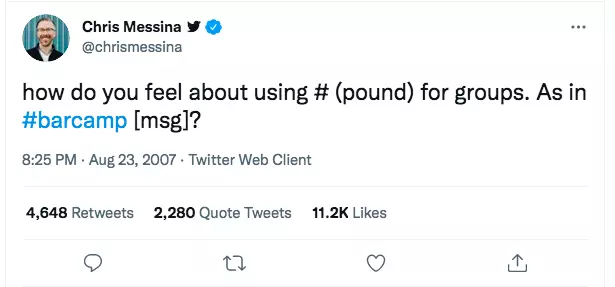
The first recorded use of the hashtag on a tweet by Chris Messina
The significance of hashtags in social media marketing
Since their inception, hashtags in social media marketing have brought about a profound transformation. By efficiently categorising and making content easily discoverable, hashtags in social media have become a powerful tool for reaching a broader audience. Social media marketers have harnessed the potential of hashtags to create viral campaigns, amplify brand awareness and accomplish their creative objectives. Moreover, hashtags play a pivotal role in directing attention towards specific niches or brands, thus driving higher engagement. While hashtags were initially synonymous with platforms like Twitter and Instagram, their prevalence has extended to almost every social media channel.
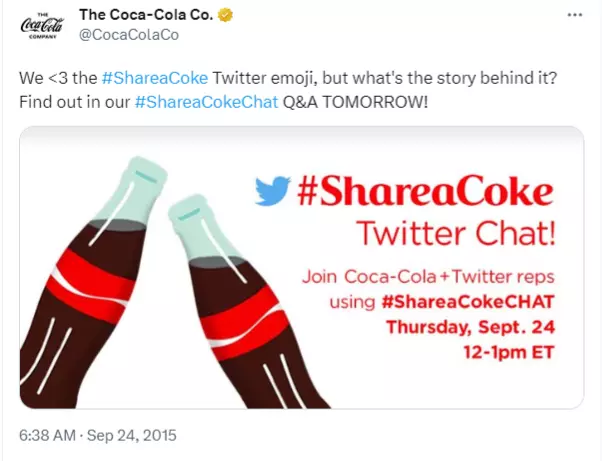
The #ShareACoke campaign was one of the most successful social media marketing campaigns
For instance, let’s take the case of #ShareACoke, a campaign initiated by Coca-Cola and its digital marketing company. By incorporating this hashtag in their social media posts and encouraging consumers to share photos with their personalised Coke bottles, Coca-Cola sparked a wave of user-generated content and participation. This innovative use of hashtags increased brand visibility and fostered a sense of community and personal connection among consumers. It exemplifies hashtags’ importance on social media and how they can effectively leverage the platforms to enhance brand engagement and establish a strong online presence.
Benefits of using hashtags
In the ever-evolving landscape of social media, hashtags have emerged as powerful tools for digital marketers and brands. Understanding hashtags’ importance in social media is crucial for any business aiming to thrive in the online sphere. Here are some key reasons why hashtags play a pivotal role in social media marketing:
Enhanced Brand Visibility: Hashtags offer a unique opportunity to increase brand awareness and visibility. By strategically incorporating relevant hashtags into social media content, companies can expand their reach and connect with a wider audience.
Targeted Audience Engagement: With the use of hashtags, digital marketers can effectively target specific groups of individuals who are genuinely interested in their products or services. This ensures that the content reaches the right audience, leading to higher engagement and conversions.
Amplified SEO and Trend Capitalisation: Hashtags serve as a gateway to improved social media platform “SEO” or search engine optimisation (SEO) by making content more discoverable on that platform. Moreover, savvy marketers can leverage trending hashtags to join relevant conversations and ride the wave of popular topics, boosting their presence on that platform and engagement.
For example, a digital marketing agency can strategically incorporate hashtags like #digitalmarketingtips or #onlinemarketingstrategy to attract their target audience and position themselves as industry experts. By harnessing the power of hashtags, businesses can unlock new opportunities for growth and success in the dynamic world of social media.
Challenges with using hashtags
Alongside the undeniable benefits, there are challenges that marketers face when incorporating hashtags into their strategies. Understanding and addressing these challenges is vital for harnessing the full potential of hashtags in social media marketing. Here are some common hurdles and effective solutions:
1. Oversaturation and Competition: As hashtags have gained popularity, the sheer volume of content associated with popular hashtags has skyrocketed. This oversaturation poses a challenge in standing out from the crowd and reaching the target audience effectively.
Solution: Marketers must strike a balance between popular and niche hashtags. For instance, a graphic design agency can promote its services and target a more tailored audience while minimising competition by combining relevant, industry-specific hashtags like #GraphicDesignAgency with more specific, long-tail hashtags like #CreativeDesignSolutions
2. Lack of Consistency and Relevance: Inconsistent use of hashtags can dilute a brand’s message and hinder its discoverability. Irrelevant or overly generic hashtags can attract the wrong audience or fail to create meaningful connections.
Solution: Conduct thorough research and develop a hashtag strategy aligned with brand values and campaign objectives. Tailor hashtags to specific posts, ensuring they are relevant, concise, and resonate with the target audience. For instance, a Graphic Design Agency could use hashtags like #CreativeDesignTips or #DesignInspiration to attract individuals seeking design insights and inspiration.
3. Trend Relevance and Timing: Staying up-to-date with trending hashtags can be challenging, as trends emerge and fade rapidly. Missing out on trending topics can limit a brand’s exposure and hinder engagement opportunities.
Solution: Regularly monitor industry trends and leverage popular hashtags that align with the brand’s messaging. By actively participating in conversations surrounding trending topics, businesses can increase their visibility and engage with a wider audience.
Hashtags on different social media platforms
Let’s explore how hashtags are used on various social media platforms
Instagram
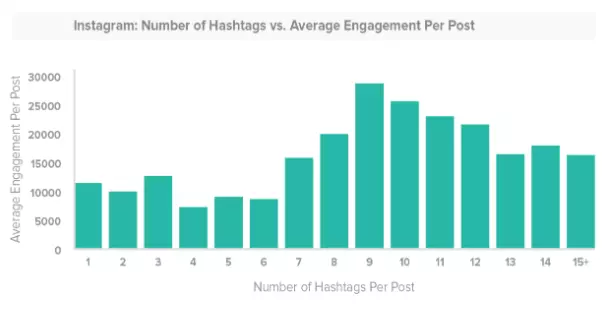
On Instagram, unique hashtags are created to drive user campaigns and increase the visibility of Instagram stories. They help users discover content related to their interests. Studies have shown that the optimal number of hashtags per post is between 9 and 11, increasing engagement and reach.
How many hashtags can increase engagement per post
Facebook
Hashtags are not commonly used on Facebook posts, as they generally don’t perform well. However, in specific use cases where content promotion is involved, hashtags can be utilised.
Pinterest
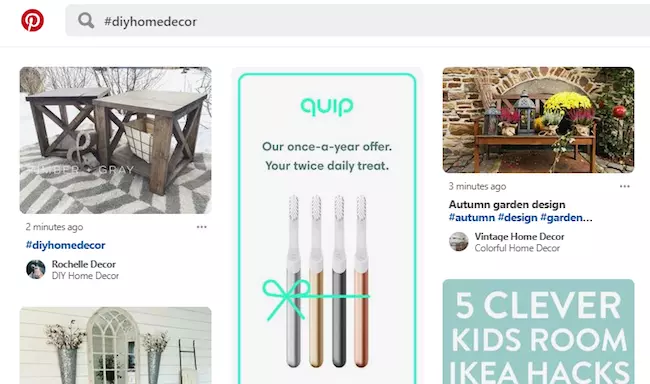
How hashtags can make finding particular topics easier
On Pinterest, hashtags are used to identify specific topics or pins. Clicking on a hashtag allows users to discover related pins. It’s advisable to use no more than 20 relevant, specific, and descriptive hashtags for better searchability.
Twitter
Tweets with hashtags on Twitter tend to generate more retweets compared to those without hashtags. However, it’s recommended to limit the use of hashtags to 1 or 2 per post for optimal engagement
Examples of great hashtag campaigns
Let’s take a look at some successful hashtag campaigns that effectively utilised hashtags to achieve their marketing goals
Byju’s Master Ji Campaign
Byju’s, a leading Indian education company, launched the “Master Ji” campaign in 2021 to honour teachers who persevered during the pandemic. Using hashtags like #KeepLearning and #LearnUnlearnRelearn, Byju’s amplified the campaign’s reach and resonated with the audience. The campaign featured a poignant film portraying a village teacher’s struggle with technology. By leveraging storytelling and relatable experiences, Byju’s sparked meaningful conversations and generated significant engagement.
The Byju’s Masterji Campaign. Source: BYJU’S YouTube
The strategic use of hashtags played a pivotal role, associating the content with popular and relevant tags for maximum visibility. The campaign’s impact went beyond social media, igniting a nationwide dialogue on education. Byju’s Master Ji campaign exemplifies the power of hashtags in social media marketing, inspiring the industry to leverage this tool for amplifying messages, fostering engagement and creating meaningful change. As a branding agency in Ahmedabad, we used this campaign as an example while training many young digital marketeers.
Protect With CarzSpa
CarzSpa, a renowned car detailing studio with a global presence, embarked on a captivating campaign to showcase its exceptional paint protection services. Through a series of visually appealing Instagram posts, CarzSpa emphasised the advantages of their paint protection films, graphic coatings, and ceramic coatings. To amplify their reach and engage the target audience, they strategically employed the hashtag #ProtectWithCarzSpa. The campaign’s hashtag gained remarkable traction, garnering over 3,000 posts from satisfied customers and enthusiasts.
The Instagram reel that launched #ProtectWithCarzSpa
This success exemplifies the profound impact of hashtags in promoting specific products or services, enabling brands to effectively penetrate their target markets and generate buzz. Managed by Flora Fountain, who is their digital marketing agency and SEO company in Ahmedabad, the team incorporated relevant and compelling hashtags into social media campaigns that significantly enhance brand visibility, boost engagement, and ultimately drive business growth. CarzSpa’s campaign serves as a testament to the hashtags’ importance in social media, inspiring brands to leverage this powerful tool for greater reach and impact.
Some concluding thoughts
To conclude, hashtags play a vital role in social media and social media marketing. They simplify content discovery, facilitate audience engagement and enhance brand awareness. Strategic use of hashtags in various brand marketing strategies can significantly promote a brand’s reach and visibility. Therefore, it is crucial for businesses to incorporate hashtags in their social media campaigns and utilise their potential to the fullest.
Remember, hashtags in social media marketing are still relevant in 2023 and leveraging them effectively can lead to improved results. Consider the benefits and challenges associated with hashtags, explore their usage on different social media platforms and draw inspiration from successful hashtag campaigns to enhance your brand’s social media presence. And of course, if you want to speak to us about it just drop an email at hello@flora.ffteam.in
Concept art of an influencer taking a selfie while promoting products
Hey there! You have an Instagram notification! Chances are, it’s probably one of the digital marketing influencers you follow going live.
The rise of social media platforms like Instagram, TikTok and YouTube has created a new breed of celebrities known as digital marketing influencers, who can influence the purchasing decisions of their followers. The fact is, at least once in our lives, we have made a buying decision based on the recommendation of our favourite social media influencer. This is a clear example of the importance of digital marketing but also the rise of influencers in digital marketing.
Before diving into creating a robust social media influencer marketing strategy, it’s essential to understand the basics: how does influencer marketing work, does it make sense for your industry and what specific benefits can it offer your business?
Enter the digital therapists at Flora Fountain, a digital marketing company from Ahmedabad, and we will help you understand the importance of influencers in digital marketing through this blog.
Do we live in a hyper-connected world? Are traditional marketing tactics like fliers and hoardings now outdated? Do brands and more importantly consumers, all over the world realise the importance of digital marketing? Do they make decisions based on what they see online?
Well, yes, yes and yes!
Now, to combat these new realities, your business must include not just digital marketing but also channelise influencers in its digital marketing strategy.
Influencer marketing is like the love child of traditional celebrity endorsements and modern-day content-driven campaigns. It involves a collaboration between brands and digital marketing influencers, resulting in campaigns that can drive impressive results in the form of going viral, generating more sales or targeting an altogether new demographic that the influencer appeals to. Using influencers strategically in this way increases the importance of digital marketing for growing your business! In this blog, you will learn how you can make this happen.
The rise of influencers in digital marketing
The very first influencers were probably the Roman gladiators with their faces painted on walls, then came Santa Claus used by Coca-Cola and of course the Marlboro Man. In India too, Bollywood celebrities have been known for influencing people in buying everything from soap to mouth fresheners. However, the landscape has shifted online and we find ourselves amidst a world of D2C (direct-to-customer) products from grain-free pet food to hair growth gummy vitamins to bespoke silver jewellery and more!
Scherezade ‘Sherry’ Shroff is one of the most prominent lifestyle influencers in digital marketing in India
While in the past it was usually the ‘already famous’, like cricketers and movie stars, who would endorse a product and promote a lifestyle, however, the always-watching digital world has made influencers famous for their lifestyles, turning them into celebrities. And with the emergence of social media, “influencing” has transformed into a full-time profession.
Tanmay Bhat promoting Unacademy on his YouTube live stream. Notice the smartly placed visible code below the stream?
Brands too have embraced influencer marketing due to its effectiveness. Indian Edtech company Unacademy had roped in comedian and YouTuber Tanmay Bhat to promote their online courses. Bhat’s live video streams have a large audience of teenagers and people in their early to mid-twenties who are probably planning to get into college or are already in college. The ideal target audience for Unacademy. Bhat would smartly sneak in a commercial line here and there during the 45 minutes long stream and even offer a promotional code like TANMAY10, offering a discount as an additional bait for the viewers.
While such collaborations between social media influencers and brands have been going on informally since the dawn of social media, there has been a remarkable surge in these collaborations over the last few years. McKinsey estimates the influencer market to be valued at $16.4 billion in 2023, across platforms such as Instagram, Tiktok (where available) and YouTube in countries like India, the US, UK and platforms like Pinduoduo and WeChat in China.
Where can influencer marketing be implemented?
Influencers in digital marketing thrive on social media, streaming platforms and review platforms. By leveraging the power of digital marketing influencers on these platforms, brands can effectively promote their products and services, increase visibility, drive sales and foster long-term brand awareness and customer loyalty.
Social Media:Digital marketing influencers have revolutionised social media marketing by creating highly engaging content that resonates with consumers. Tapping into this growing trend, prominent affordable luxury brand Daniel Wellington collaborated with fashion and lifestyle influencers like Aashna Shroff, leveraging their large followings and content around fashion and style to promote their watches. By offering customised discount codes and referral incentives, the brand achieved widespread recognition and increased sales.
Streaming platforms: Remember when we spoke about comedian Tanmay Bhat promoting brands while streaming videos? Platforms like YouTube and Twitch have many micro and mega influencers who regularly stream videos talking about fashion, lifestyle, gaming and pop culture. These video streams are a gold mine for brands to attract customers. While we all know about YouTube, Twitch is popular with professional and amateur gamers, who stream their gameplays for hours at a stretch. One such influential gamer, Ninja, has endorsements from Red Bull, UberEats and Adidas!
Reviews: Curated reviews are another highly impactful way of influencer marketing, where a brand can get the influencers to have a positive conversation started around their product or service. No, we’re not talking about getting fake reviews, but getting influencers to talk about their experience of staying at a hotel, a spa treatment or dining at a specific restaurant. A good example of it is the website Curly Tales, led by Kamya Jani. They tie up with lifestyle, food and travel brands and promote them via articles, listicles and videos. As an SEO company in Ahmedabad, we usually help travel and food brands explore such collaborations through guest blogging and social media reviewing.
Advantages of Influencer Marketing
Influencers in digital marketing in India have emerged as a powerful strategy with numerous advantages for brands. Here are three key benefits that make influencer marketing a valuable tool in your marketing arsenal.
Increased Brand Awareness: Collaborating with digital influencers can significantly boost brand awareness. Their large and loyal following provides access to a wider audience, allowing your brand to reach potential customers who may not have been aware of your products or services otherwise. Through authentic and engaging content, influencers create a buzz around your brand, increasing visibility and capturing the attention of their dedicated followers.
Higher Engagement: Influencer marketing offers the advantage of higher engagement rates. Influencers have built a strong connection with their audience and when they endorse your brand, their followers are more likely to engage with the content and take action. Whether it’s liking, commenting, sharing, or even making a purchase, influencer-driven campaigns tend to generate higher levels of engagement compared to traditional advertising methods.
Cost Effectiveness: Influencer marketing can be a cost-effective strategy for brands, especially when compared to traditional advertising channels. Collaborating with influencers allows you to tap into their established platforms and dedicated fan base without the need for expensive production or media buying costs. Additionally, influencer partnerships often offer a higher return on investment (ROI) due to the targeted nature of the audience reached and the authentic trust built between influencers and their followers.
Building an effective influencer marketing strategy
Your brand is your brainchild and only you get to pick how you want your consumers to perceive it! When deciding on an influencer marketing strategy it is important to understand how it will add to your brand’s value and vision. Below are some strategic steps to build an influencer marketing strategy:
Define your brand’s goals and what you want to achieve through that marketing campaign.
Identify your brand’s target audience and what social platforms they use most.
Select the right digital marketing influencer that specialises in your brand’s niche and can help you create the right content.
Develop a campaign brief which clearly states expectations for an influencer and the kind of content you want them to create for your brand.
Measure the campaign’s performance and identify what worked well and what didn’t to feed the strategy for your next influencer marketing campaign.
Build long-term relationships with your influencers in a manner that helps build trust with your audience and increase the effectiveness of your campaigns over time.
Influencer marketing is an ever-evolving and growing field and your brand must adapt to its strategies proactively to stay ahead of the curve and reach new audiences. As a branding agency in Ahmedabad that also specialises in creating a digital strategy, including using influencers in digital marketing in India, we can help you grow with influencer marketing collaborations. If you are ready to get started just say hello@flora.ffteam.in
Frequently Asked Questions (FAQs) about Influencer Marketing in Digital Marketing
An online influencer is an individual or a page who/that has built a significant following and influence on various digital platforms. They have the ability to impact the opinions, behaviours and purchasing decisions of their audience through their content and recommendations. Influencers come in different types. Those with 1K to 10K followers are nano-influencers, while those with 10K to 50K followers are micro-influencers. The ones with 50K to 500K followers are mid-tier influencers while those who have a following ranging between 500K to 1M are macro influencers. Anyone beyond 1M followers can be categorised under Mega Influencer or celebrity.
Influencer marketing helps in expanding brand awareness by reaching a wider audience through the influencer’s following. It enhances customer engagement and trust as influencers endorse products/services, creating authentic recommendations that resonate with their followers. Influencer marketing can lead to increased sales and conversions, as the influencer’s recommendation can influence their followers’ purchasing decisions.
Start by identifying influencers who align with your brand’s values, target audience and industry niche. Look for influencers who have a highly engaged and authentic following, as well as a track record of producing high-quality content. Tools like social media analytics and influencer marketing platforms can aid in identifying suitable influencers. Collaborating with influencers who genuinely resonate with the brand will ensure a stellar partnership.
As an entrepreneur, you are often thinking of ways to reach the right customers for your product service and adding value to customers’ lives. But how do you find out if you are talking to the right people? How can you be sure of what they want and if your business fulfils this need?
This is where data comes into play! Data for any business refers to information collected, stored, and analysed to support decision-making, improve operations, and drive business growth. This data can come from various sources, including customer interactions, financial transactions, marketing campaigns, and operational processes. The data can be structured and unstructured and can be analysed using various techniques.
In today’s business environment, where almost everything is digital, data has become an invaluable resource for companies of all sizes and industries. As a digital marketing agency known among the experts in data analytics in digital marketing, we break down the clutter to help you understand the importance of data analytics, what it takes, how it helps, and why you need it too.
Data analytics is studying, understanding and then interpreting pieces of information collected from various sources about users, competitors and products, using various tools, methods and techniques, to make informed decisions about business. Sounds convoluting? Let’s make it a bit simpler.
Data analytics, simply understood, is the process of collecting and analysing raw data to catch up on trends and simultaneously find answers to that million dollar question: what does your target audience want?!
Importance of data analytics in digital marketing
By analysing data, businesses can gain insights into customer behaviour, market trends, and operational performance, which can help them make more informed decisions and identify new opportunities for growth. Effective data management and analysis can also help businesses to reduce costs, increase efficiency, and improve customer satisfaction.
The data collected through analytics in digital marketing can help you create efficient, result-oriented social media marketing campaigns and digital strategies.
Data analytics in digital marketing helps you understand a consumer’s purchasing pattern and power.
It reduces a business’s guesswork and directly takes you to the platform where your business can derive maximum advantage.
Analytics in digital marketing also plays an influential role in measuring the results of marketing efforts and tracking key performance indicators (KPIs).
It allows your business to adjust its prices to be more competitive in the long run, which in turn, gains your business access to new markets and potential customers.
Understanding consumer behaviour & preferences with data
Understanding consumer behaviour is a crucial aspect of data analytics in digital marketing. By analysing data, businesses can gain insights into what drives consumer buying decisions, both now and in the future. These insights can then inform business decisions and help companies better cater to their customers’ preferences. Here are some ways that data-driven insights from digital marketing analytics can help businesses better understand consumer behaviour and preferences:
Personalised marketing: When you use analytics in digital marketing to understand a consumer’s purchasing patterns, you can create personalised marketing messages and offers. This helps your branding and graphic design agency build customer loyalty and keep consumers committed to your brand. One of the best examples of this, is the ‘personalised’ notifications sent by Zomato & Swiggy to its app users.
Staying updated with the trends: Shifts in purchasing patterns and swift changes in the consumer behaviour can also be identified through analytics in digital marketing and right actions taken to make the most out of it. E.g. Restaurants can offer special offers on bulk orders in the evening during IPL season.
Acting on consumer feedback: Once you dig deeper into customer feedback it becomes extremely easy to gain insights into how a consumer perceives your business. This customer feedback can also help businesses identify their areas of improvement and also make decisions about marketing content directed to a specific target group.
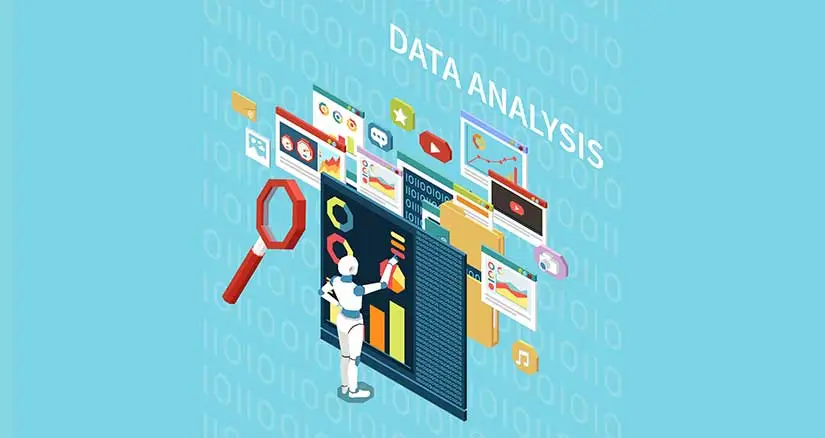
Data Analysis to understand various aspects of Digital Marketing
Leveraging data analytics to create effective campaigns
By using data analytics in digital marketing, businesses can develop effective campaigns that drive results. Before launching a campaign, it’s important to set clear goals and understand what the business hopes to achieve. This includes defining key performance indicators to track data and make data-driven decisions.
To create compelling content, businesses should focus on quality over quantity. By analysing data from digital analytics, businesses can gain insights into what types of content drive engagement and conversions.
Let’s make it simpler. In April 2022, Kentucky Fried Chicken (KFC) launched their campaign “Love At First Bite” tapping into the emotion of its customers savouring their food. What went behind the scenes was extensive consumer research, which also involved poring through thousands of posts online about KFC, where they could identify that their customers always talked about their favourite part of eating a KFC. Check out the campaign below. We love it!
The best example of using analytics in digital marketing and other sources of information, is to refine future marketing efforts and maximise results.
Tools that help with data analytics in digital marketing
Navigating through the complex world of analytics can be a challenging task and the technologies can seem to become extremely overwhelming when you initially start using them. But you’ve to fully understand their strengths and use them to your leverage to figure out what is best for your business.
Some popular tools and technologies of analytics in digital marketing that have been proven useful to mankind in the past have been mentioned below!
Data Storage, Processing, and Visualisation Tools like Apache Spark, and Apache Hadoop
Cloud Platforms like Amazon Web Services and Google Cloud Platform
Business Intelligence Tools like Tableau, Power BI, and QlikView
Machine learning and artificial intelligence tools like TensorFlow and PyTorch.
There are many tools out there to help you study data analytics of your campaign
Finally, let’s take a look at how the use of data and its analysis in digital marketing is shaping our retail future!
What’s in for the future?
Data analytics is an integral part of executing marketing on digital mediums today. The kind of data from time spent on a post, to what time of the day your audience is more active, to what their interests are….can be mind boggling. However, there are some challenges that a business might face when trying to incorporate data analytics in digital marketing.
Data Overload and Quality: The volume of the data initially can be quite overwhelming which makes it difficult to identify relevant insights and the quality of data can be inaccurate or incomplete making it difficult for your business to come to appropriate conclusions.
Privacy Concerns: The use of consumer data is subject to strict regulations and businesses need to ensure that they are compliant with privacy laws.
There are always two sides to a coin and despite there being a few setbacks, there are many opportunities that analytics in digital marketing provides to a business.
Personalisation: Data analytics in digital marketing allows businesses to gain a deeper understanding of their customers and then use that information to custom marketing messages to their preferences.
Innovation: The usage of data analytics in digital marketing opens up new opportunities for innovations, allowing businesses to experiment with new strategies, techniques and tools like AI to stay ahead of the competition.
However, according to recent surveys, the future of data analytics in digital marketing looks even better. Some of the trends that you can look out for in consideration of your business are predictive analytics, customer data platforms, live AI Reports, augmented reality, and voice search optimisation among many others.
Frequently Asked Questions, answered!
The Company of Digital Marketing data can be divided into four categories: demographic, behavioural, transactional and contextual. Demographic data includes information about age, gender, location and income level. Behavioural data includes user interactions with websites, social media platforms and email campaigns. Transactional data includes information about purchases and other financial transactions. Contextual data includes information about the user’s environment, such as the time of day, the device used and location.
Data Analytics can help improve ROI in Digital Marketing by providing insights into which marketing channels are most effective, which campaigns are driving the most conversions, and which customer segments are most valuable. This information can help marketers to allocate their budgets more effectively, target their campaigns more accurately and optimise their strategies to drive higher revenue and ROI.
There are several challenges associated with using Data Analytics in Digital Marketing, including data accuracy, data privacy and data complexity. Collecting accurate and reliable data can be difficult, especially when dealing with multiple sources and platforms. Data privacy regulations and concerns can also limit the amount of data that can be collected and analysed. Finally, analysing large amounts of complex data can be time-consuming and require specialised skills and resources.
Wrapping Up!
Now you know how data analytics in digital marketing can help expand your business exponentially! Data analytics in digital marketing will help your business identify what’s working and what’s not and drive better results too.
In this digital age businesses that ignore the potential of analytics in digital marketing will fall behind their competitors. Therefore, businesses need to work with a reputable digital marketing agency and a good SEO Company in Ahmedabad. By leveraging data analytics in digital marketing. If you still have any questions kindly drop us a hello at hello@flora.ffteam.in.