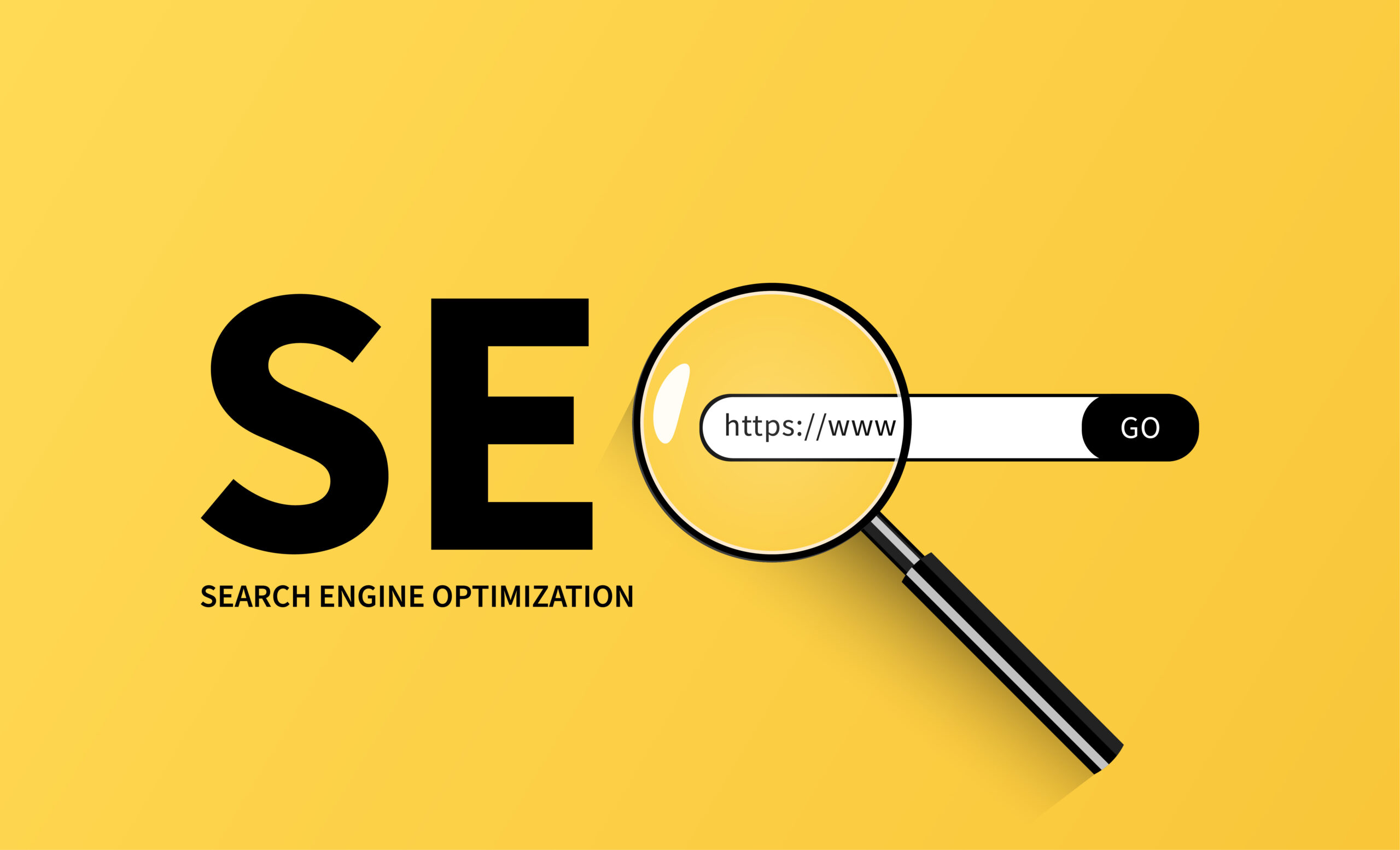
93% of all online experiences begin with a search engine like Google.
75% of users never go past the first page of search results.
Knowing such facts is one thing, but internalising them and then acting on them is what helps a brand really shine online.
SEO or search engine optimisation empowers brands to do that. The process of optimising a website to improve its visibility and rank in search engine results is known as SEO. It is a detailed plan which on execution helps a website improve its search engine ranking in order to capture more organic traffic. This plan is built on two different foundational pillars like on-page and off-page SEO. In order to fully optimise a brand’s SEO strategy, a thorough understanding of these two pillars become extremely important.
The difference between on-page and off-page is quite simple. On-page as the name suggests are all the activities done ‘on the pages of your website’. Whereas off-page means all the activities done ‘beyond the pages of your website.’ Of course it’s more than just these two lines.
Read on as Flora Fountain, a top SEO company in Ahmedabad, India, is here to help you get a better understanding of all that SEO jazz.
Let’s jump in!
On-page SEO
The process of optimising individual web pages in order to rank higher and garner more relevant organic traffic in search engines such as Google and Yahoo is known as On-page SEO. It entails optimising both the content and HTML source code of a page. From creating content with keywords, optimising title tags, meta tags, and internally linking relevant pages as per the URL structure, everything that takes place on the website falls under on-page SEO.
Content and keywords
You might already know all about content and keywords, but a refresher never hurts!
Content is indeed the king QUEEN! Most brands, despite knowing this, fail to optimise content. SEO includes looking for the keywords that your audience is using to search for information on the internet, and then creating, optimising, and regularly publishing website content around these keywords. Content also includes the kind of images you put out on your website. So you need to optimise them as well. Make sure that they are not larger than they need to be and are in the right format (JPG and PNG).
The experienced SEO team at Flora Fountain, the best digital marketing company in Ahmedabad, India, also understands how to optimise existing content, in order for a brand to increase its organic traffic.
Title Tag and Meta description
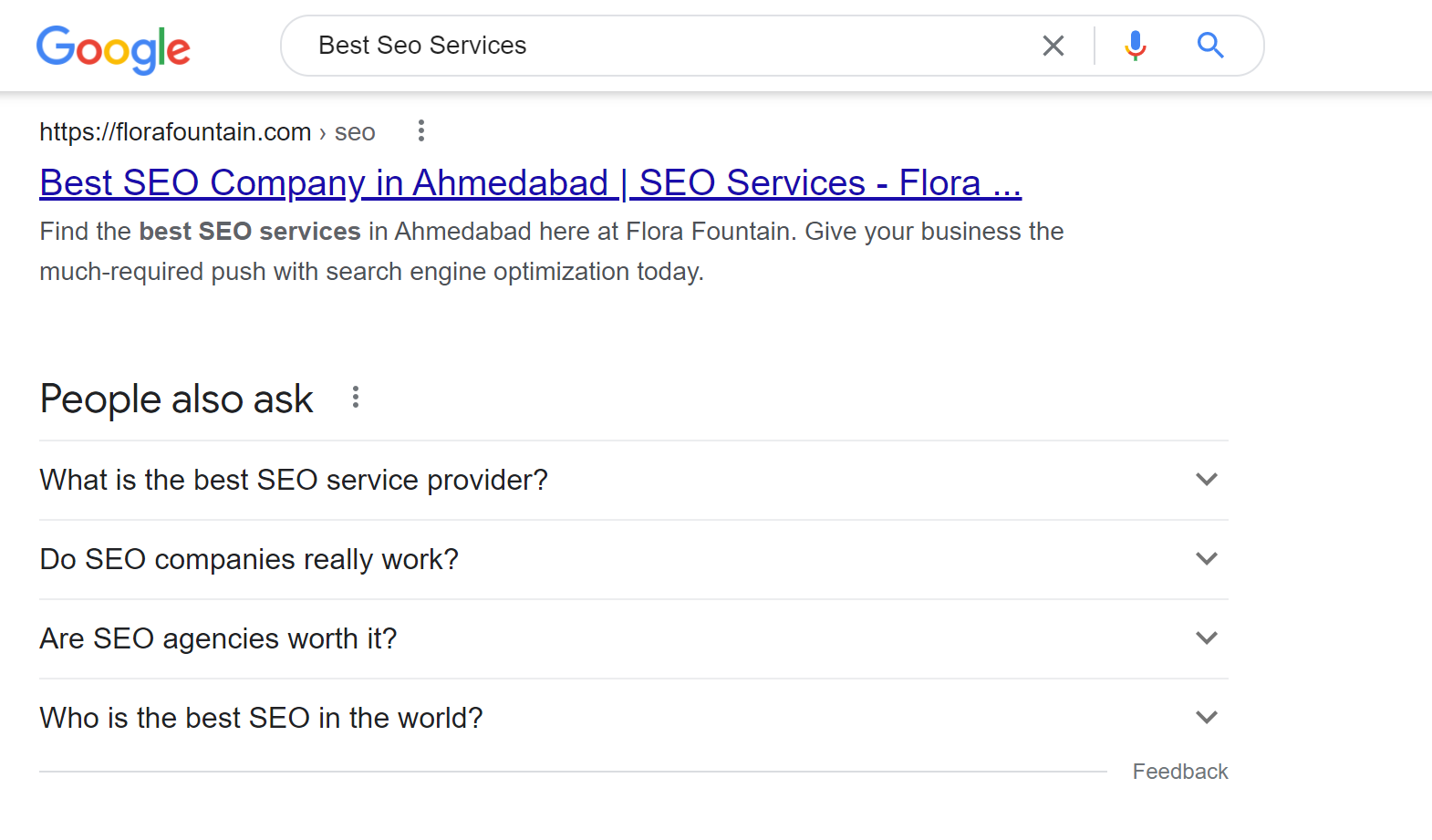
The main heading or the title of the web page is a title tag. And the short description that appears under it is a meta description. Title tag comes up on the search engine results page (SERP) and is a very important factor for the success of on-page SEO. And because Google search engine usually picks up only about 65 letters or characters from the title tag, a brand needs to choose every word, even letter, very wisely! Meta tags on the other hand describe the content on that page but, more importantly, it’s written to help your web page stand out in the list of SERP results. Keep the meta description under 155 characters to ensure your entire description is shown in search results.
Internal Linking
Connecting any link from one page on the website to another page on the same website is known as internal linking. Linking to various relevant pages on the website makes it easier for search engines like Google to understand the relationship between pages on the site and to crawl everything. Internal linking also provides a more immersive user experience that can keep the visitors engaged for a longer time. Though, unlike backlinks, internal links don’t boost the website’s domain authority. But, they funnel existing domain authority built using backlinks and spread it across the website.
Mobile friendly website
A website designed to show the most optimised view as per a device’s screen size, ranging from smartphones to tablets, is known as a responsive website. The overwhelming majority of website users browse on their phones, and yet 44% brands still do not have mobile-friendly websites. Google too favours mobile-friendly websites, pushing up the ranking of the website if it is mobile-friendly. These are all the considerations that go into website development when you hire a top SEO company like Flora Fountain to work on your website re-design from day 1. Just like this Ahmedabad-based school did!
Another thing to keep in mind is that SEO results are different when it comes to mobile pages. A website does not automatically inherit the main site’s SEO ranking on mobile. The search results on mobile are calculated based on the site’s mobile page speed.
URL structure and SSL HTTPS
URL structure is a very crucial part of any website. URLs with relevant keywords allow search engines to crawl from page to page on a website very smoothly. This also makes navigation more efficient for visitors. While creating a URL, a brand should always use the primary keyword for the page and avoid repetitive words to keep it short.
Similarly, an SSL, or Secure Sockets Layer, certificate is also very important as it improves the website’s page security and visibility. With the help of SSL, the likelihood of interference of a third party in between a website’s server and a visitor’s server, decreases, guaranteeing that the content on the website is safe. Moreover, because of this search engines give ranking preference to sites that are SSL enabled.
Website Speed optimization
1,2,3,4,5! If your site takes this much time to load its content completely, chances are that 90% of users will abandon your site before the website loads. This metric is tracked as the bounce rate. And the more time your website takes to load, the higher the bounce rate. While crawling, Google correlates a high bounce rate with lower user engagement which affects your ranking as well. In fact, as per Google guidelines for developers, the site speed does impact search rankings.
So while most website design agencies might not give enough importance to this, from an SEO and user experience perspective, your website must load in under three seconds, so that with the help of SEO services and other on-page and off-page optimization, your website can come up ranking high in Google.
Breadcrumb navigation and Alt Text
Some other important parts of on-page optimisation include adding breadcrumb navigation and alt text. Breadcrumbs inform the website visitors to navigate through the site. It shows them where they are on the website. Moreover, it enables Google to understand the structure of the site. While alt text is a word or phrase that can be attributed to a picture file to help ensure it gets indexed and makes the website more accessible for reading software. Both these factors make a website with alt text for its images rank highly.
As you might have guessed, On-page SEO optimisation is something you have complete control over through your website’s code and content, however that’s not always the case for off-page SEO. So what exactly is off-page SEO optimisation?
Off-page SEO
As mentioned before, this refers to all the strategies and activities planned and executed, outside of your website, to bring traffic to it. It is tremendously valuable because it tells search engines that the website is important to others on the web. Every link that a site receives acts as an endorsement from another source. It shows the quality of the website. This is usually done through backlinks.
Backlinks
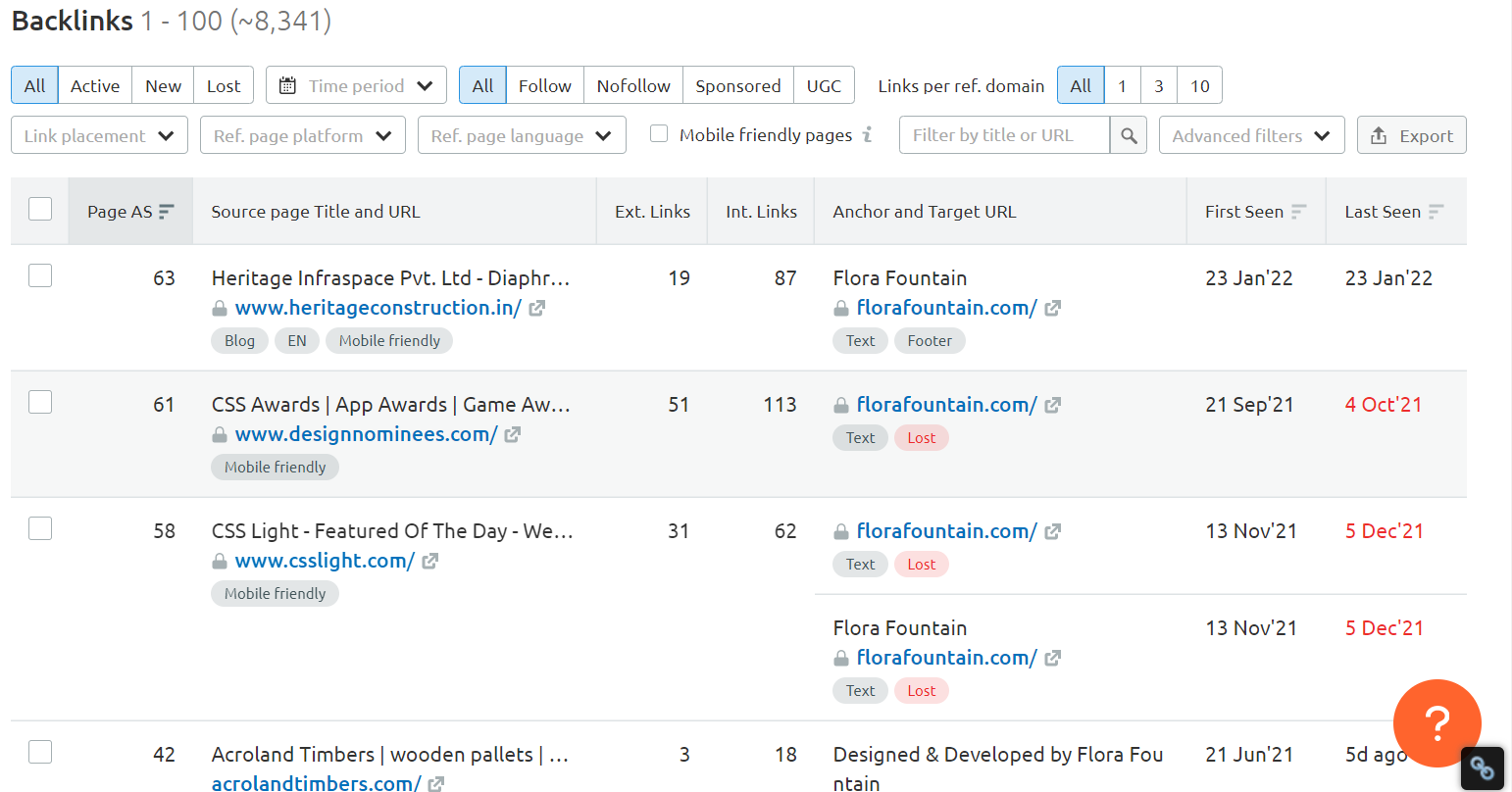
Also-known-as inbound links or incoming links, Backlinks are links that are created when one website links to another. They help a website gain more traffic and it also serves as one of Google’s top three ranking factors.
Imagine, a company with a brand new website. And no one links to it and it doesn’t submit the website Google. It can’t be found because search engines will take forever to find it, if at all. But if multiple other websites, especially those with a high ranking or domain authority, link to it, search engines can crawl through that link and index the pages. If this sounds awfully a lot like a popularity contest straight out of high school, that’s because it kind of is. Being linked to by the “popular kids” or high-trafficked websites, usually ranks your website high in search engine’s crawling eyes, and eventually bodes well for your website traffic.
Create. Earn. Build.
These are the three ways to get backlinks.
Creating means when someone manually adds links to their site from other sites. This can be done by regularly leaving blog comments or replying on forums. Earned backlinks or organic backlinks occur when people discover a site’s content after googling it or through social media and choose to link it in their site. This usually happens when the content on your website is rich with information or entertainment, or another quality that the reader highly values. Last but not the least, building backlinks means when a website owner contacts other website owners or editors and requests them to link to their website. This usually works as a barter between websites.
Local SEO
According to studies, more than 50% of ‘near me’ searches result in a store visit and 46% of all Google searches are seeking local information. So your brand needs to show up when someone searches for the service you provide in your area. That means you need to show up in your local google searches. But how does one go about it? With ‘Local SEO’, which helps brands to be more visible in local research on search engines like Google.
As part of local SEO, a citation is an online mention of your business on another’s website, that links not only the name but also the address and phone number of your business. It consists of your business’s name, address, and phone number or NAP. You can submit these citations to the listing sites or can hire an agency to do it for you. These citations work as proof for Google’s algorithm to find out that your brand is a local business.
Social media
Over 93% of regular internet users log into social media. So as a brand make sure to create social media accounts for your business on the platforms where you know your target group is active.
And though it is true that the likes and comments on social media don’t directly impact the website rank, it still enables you to promote your site to 93% of users who are either new or existing customers of your brand. When they see your brand on social media, they get an opening to contact you, and you get to answer them regularly.
Another thing that you can do is join hands with the right influencers and seek collaborations to promote your product or service. When influencers successfully create a buzz for your product, Google takes note of this online chatter and if there are enough shares, they’ll start to prioritise your content over others. Similarly, blog posts are a great way to put out new keywords with more recency, as blogs get indexed by search engines. In such cases, it makes sense to go with a top digital agency, with social media services, content-writing services and SEO services in-house so all the functions can work together without friction.
Reviews
It should come as no surprise that people do a fair share of research on the product they are about to purchase. And 88% of customers trust reviews posted by others online. So the more the reviews, the more your brand establishes itself as a trustworthy online brand among your existing and potential clients.
And according to Google’s local quality guidelines, responding to such reviews can improve your business visibility.
Still on the fence about SEO? Let the SEO experts, at one of the best digital marketing companies and SEO companies in Ahmedabad, India help you get a better understanding, and craft a smart and persistent SEO strategy for you. Give us a call now to inquire about our SEO services.